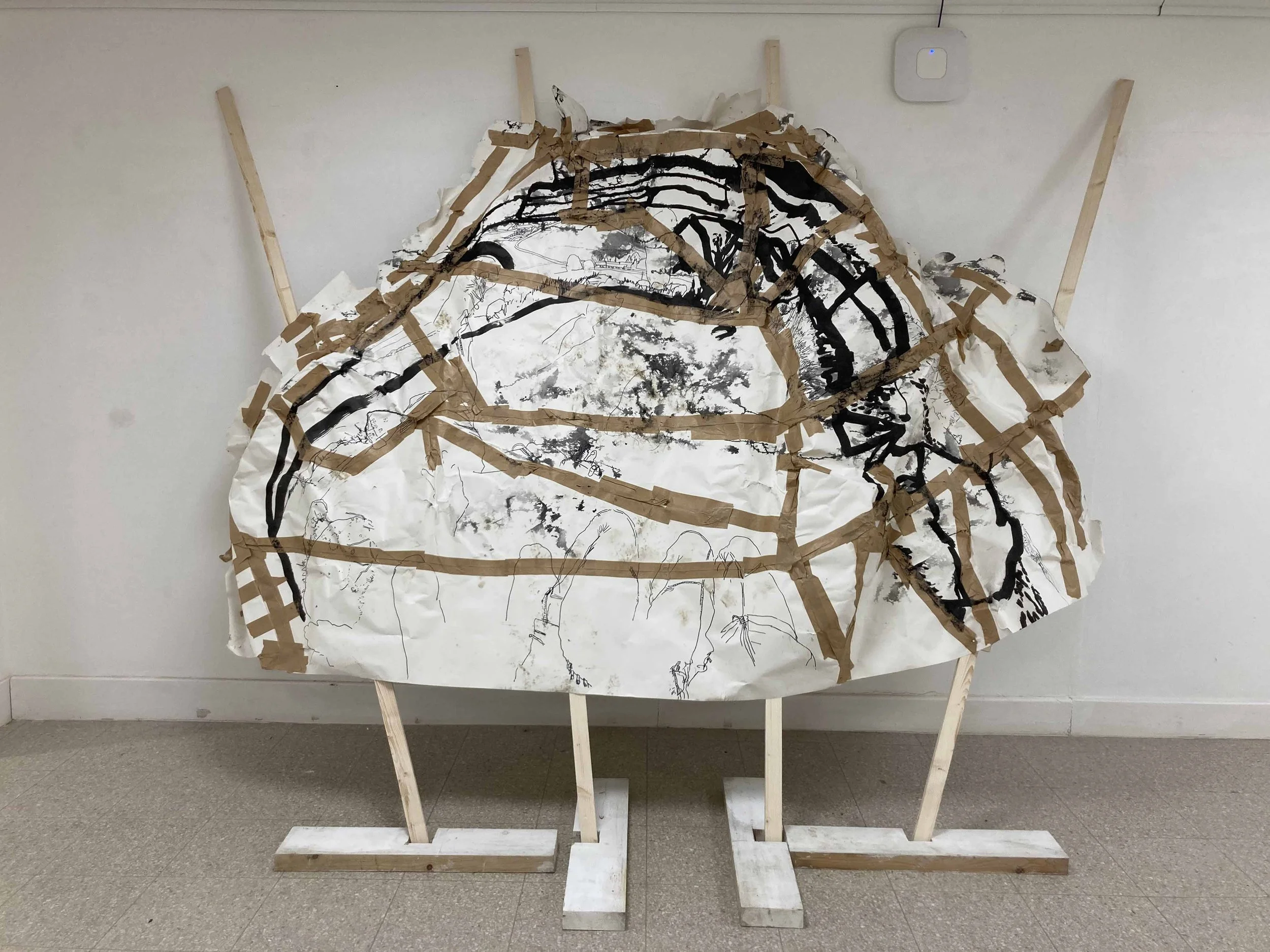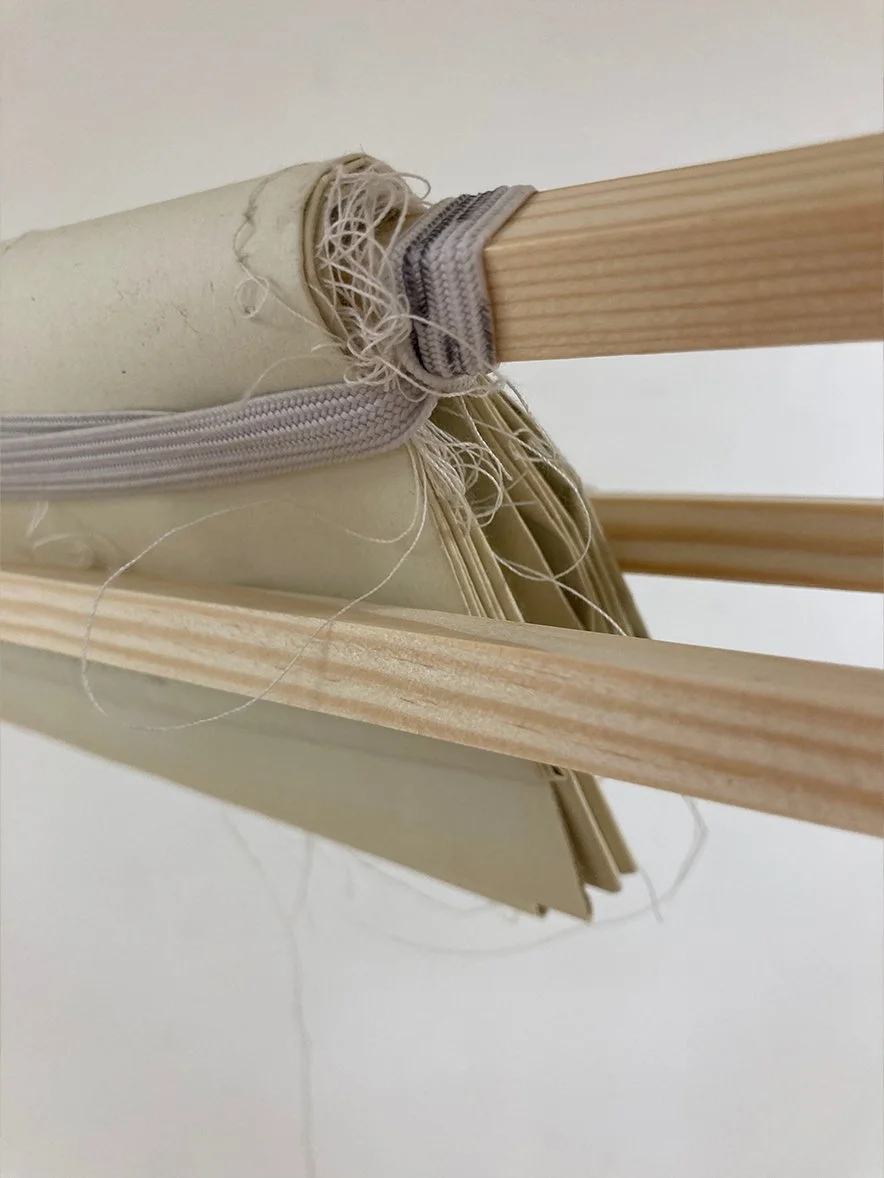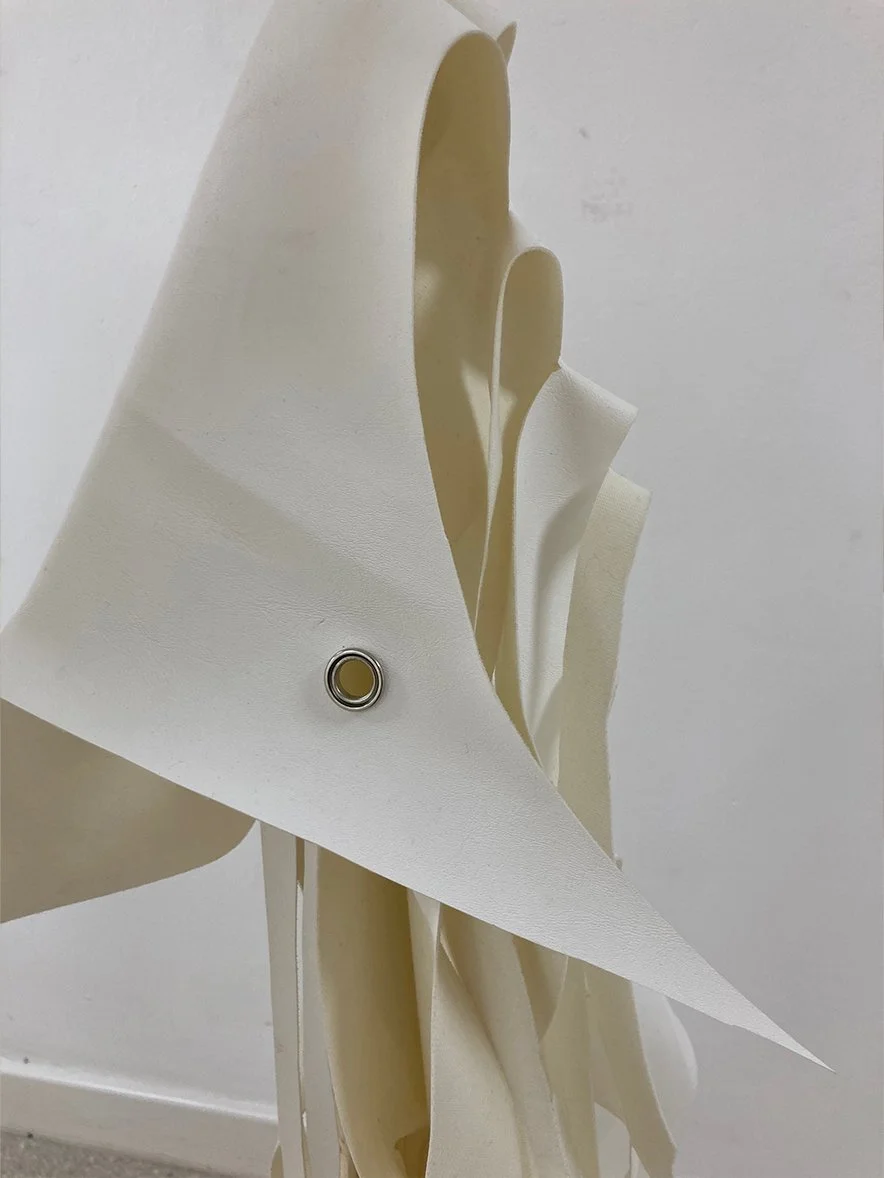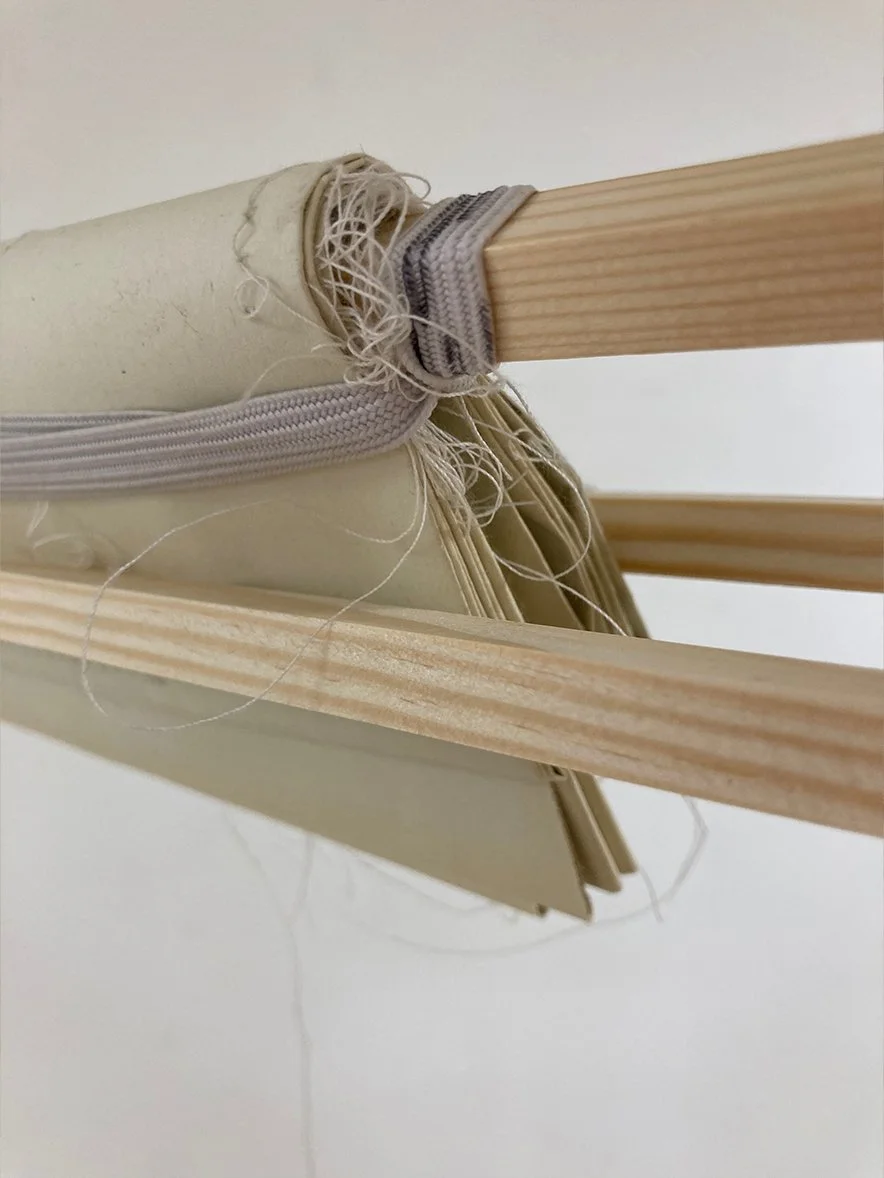
'Rock cover / visualising concept' (2021)
‘Rock cover/visualising concept’
Solo exhibition
University of Chester, Kingsway Campus
November 2021
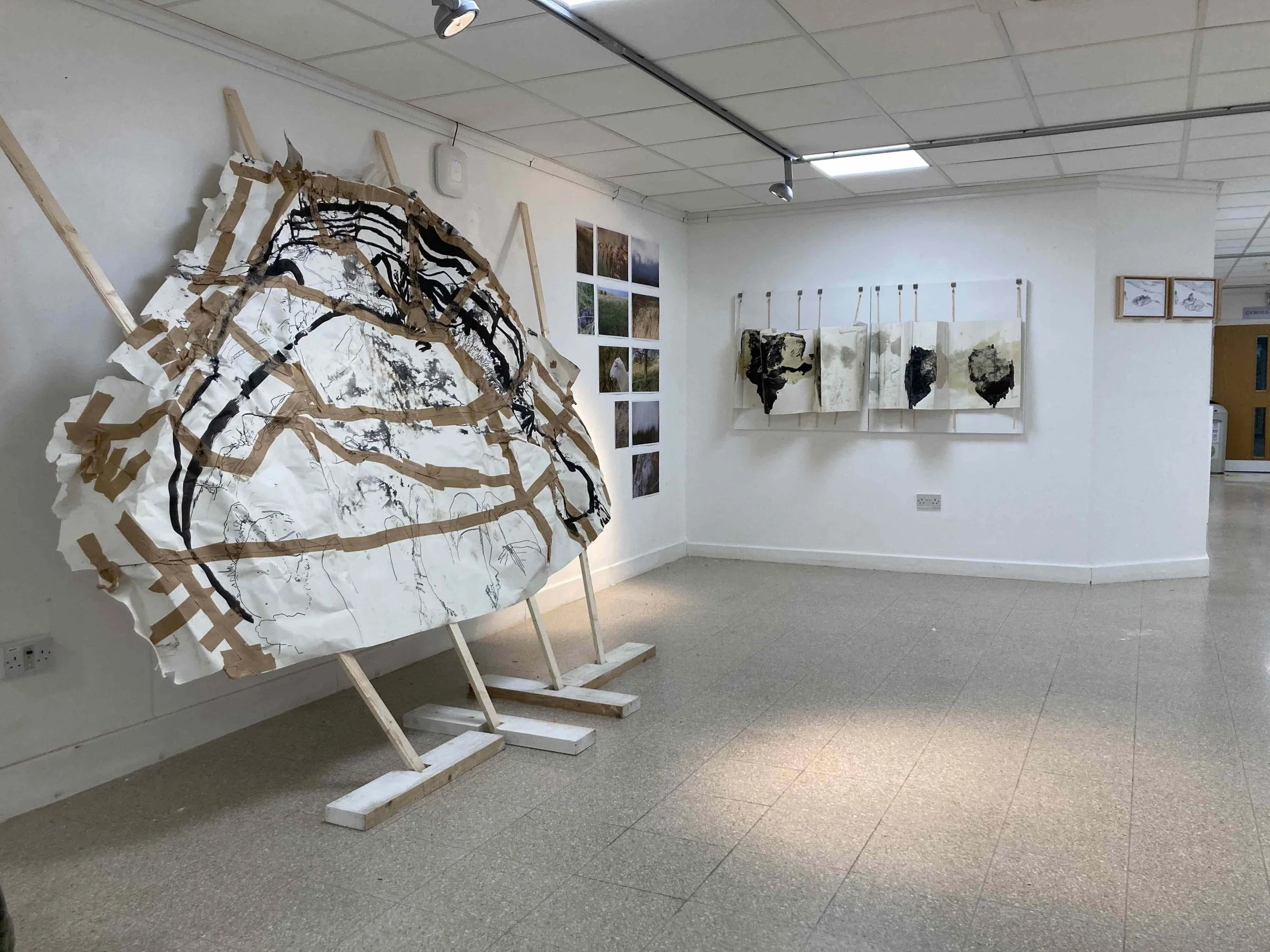
This exhibition was the third occasion (out of six) when I showed artwork and associated materials in connection to my practice-based research project at the University of Chester. This six-year project consisted of the development of a new visual arts practice in response to the landscape and weather of Bakestonedale Moor, an exposed area in the Peak District (UK). The work on display can be seen to belong into two areas of engagement with the outdoor world and artmaking.
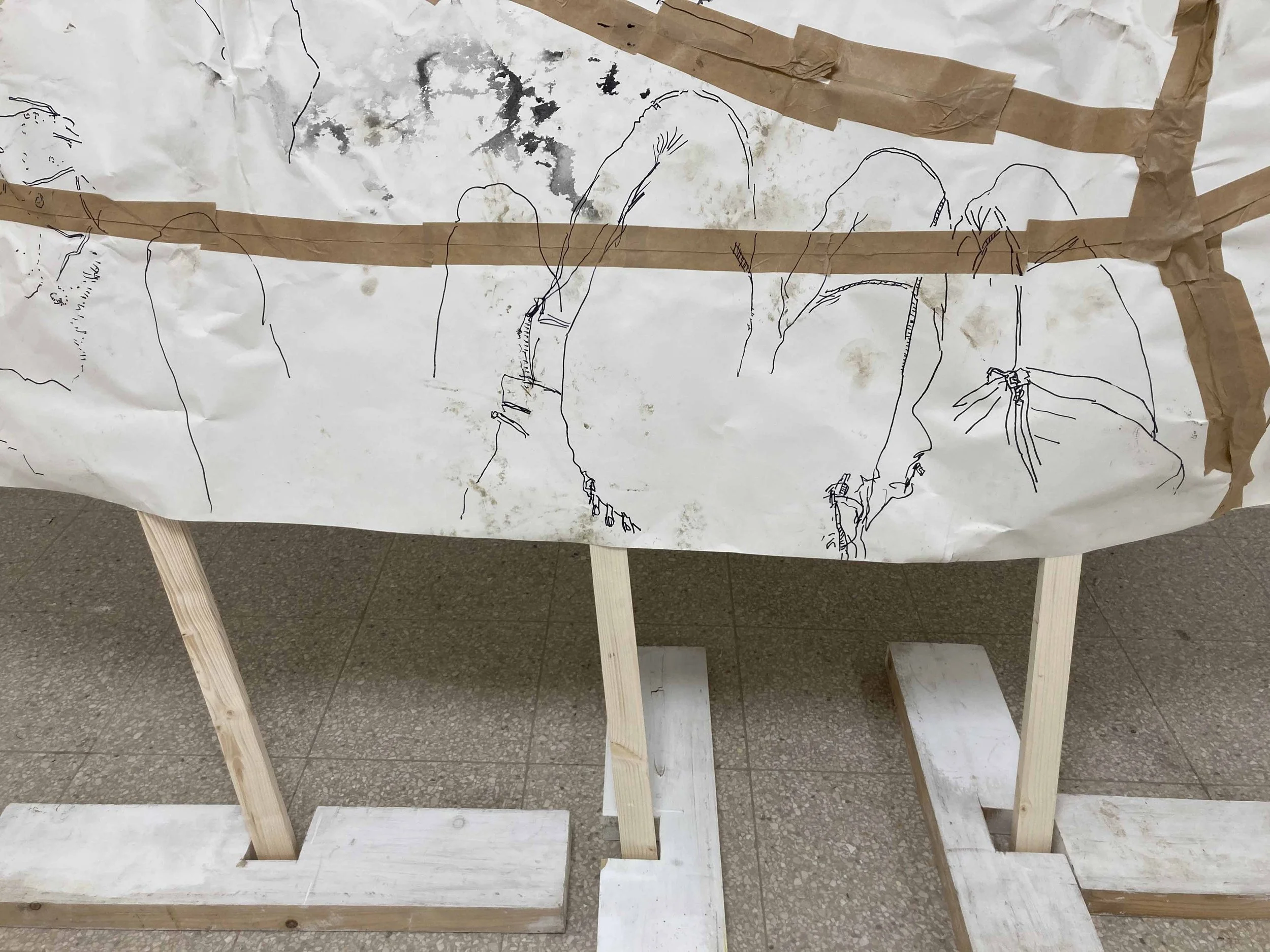
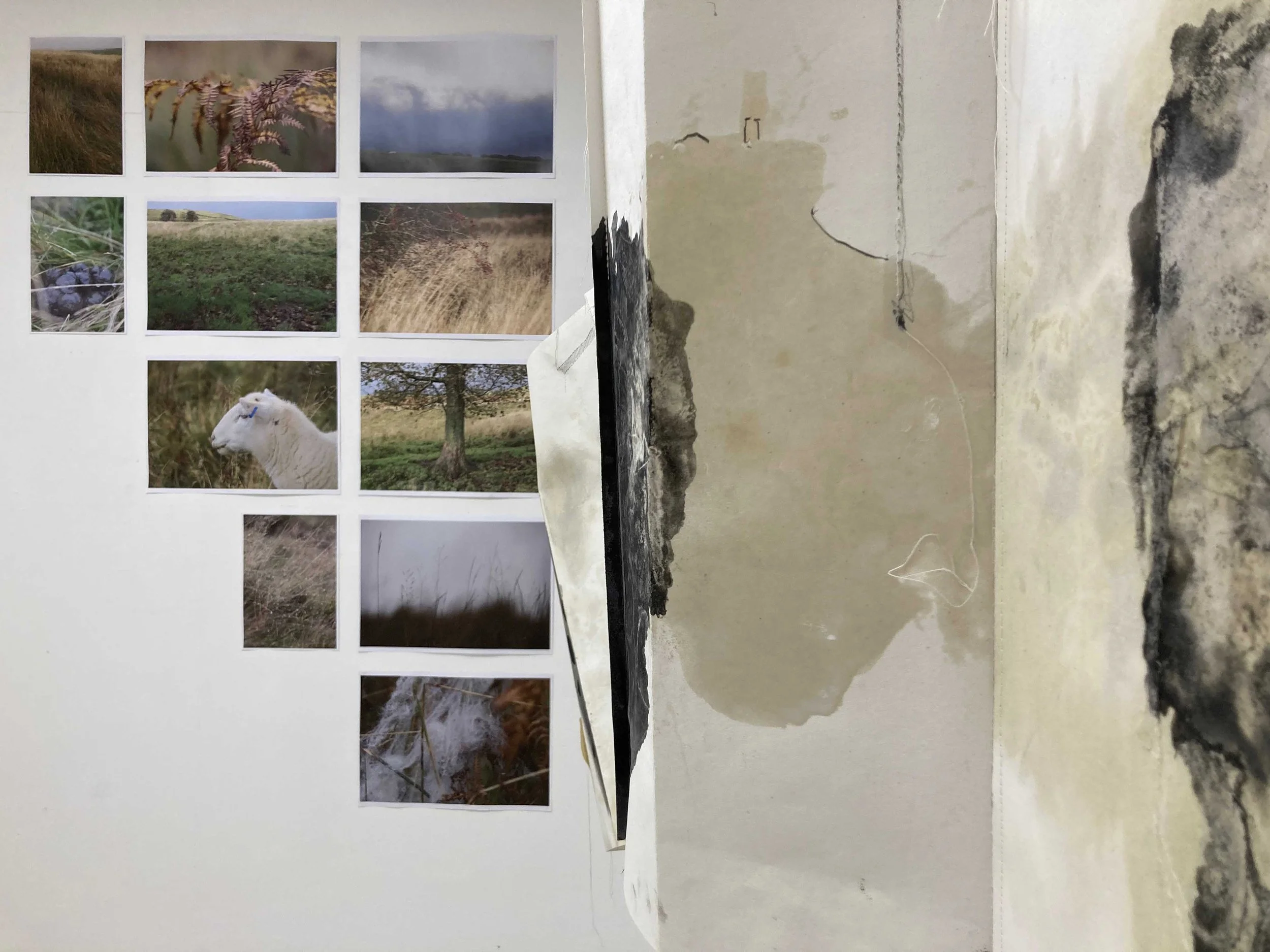
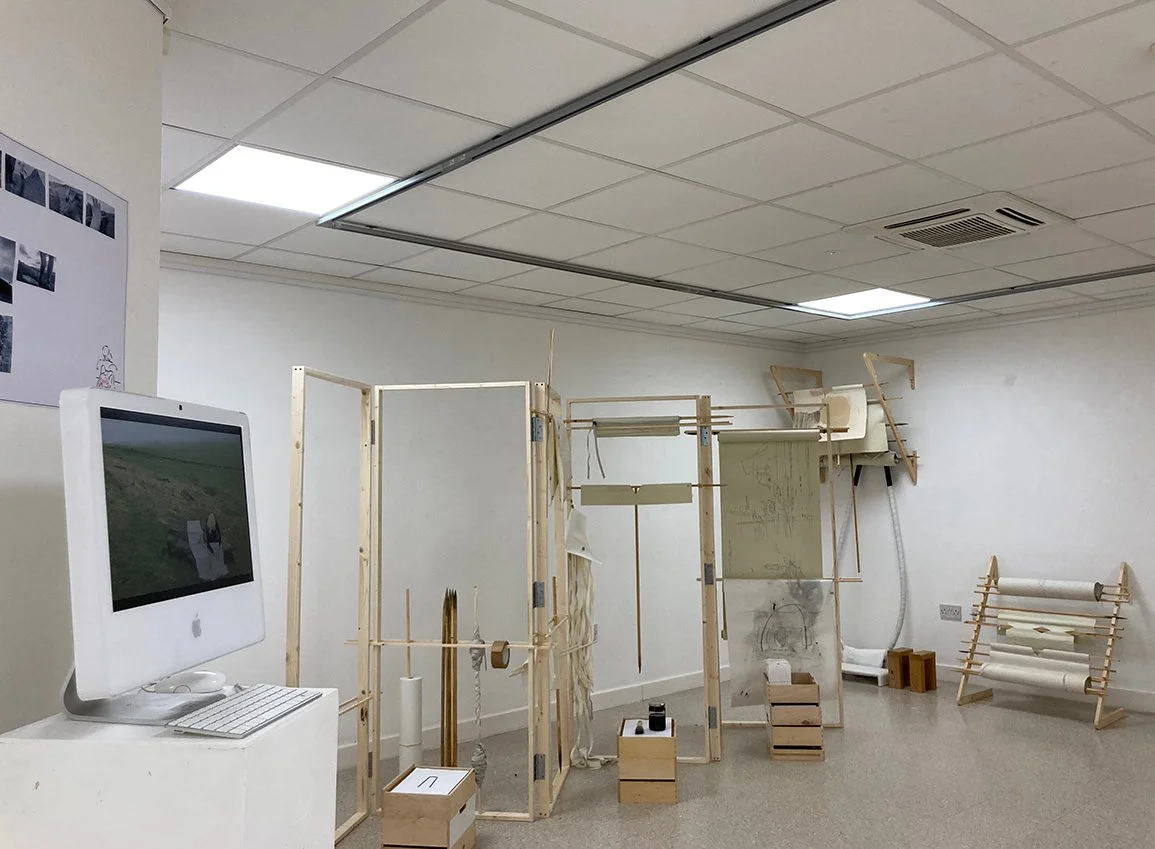
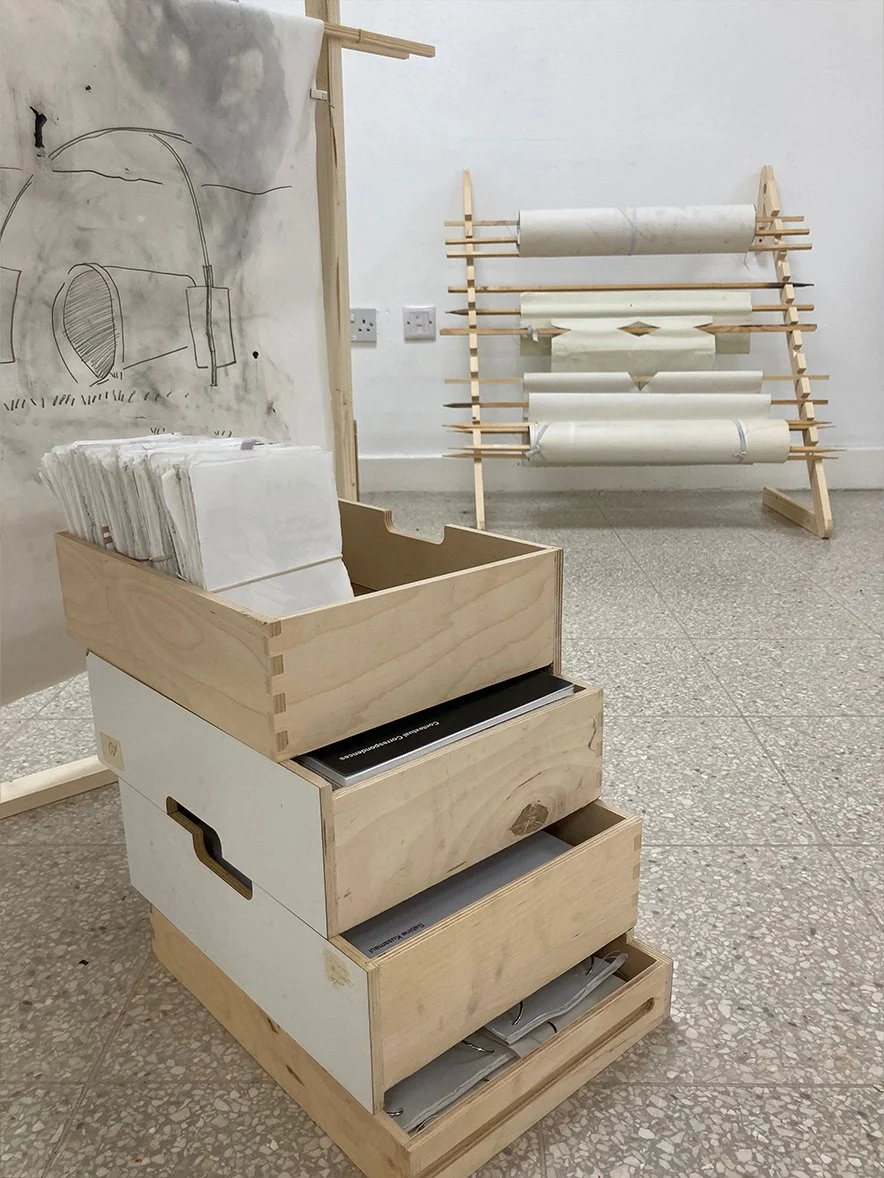
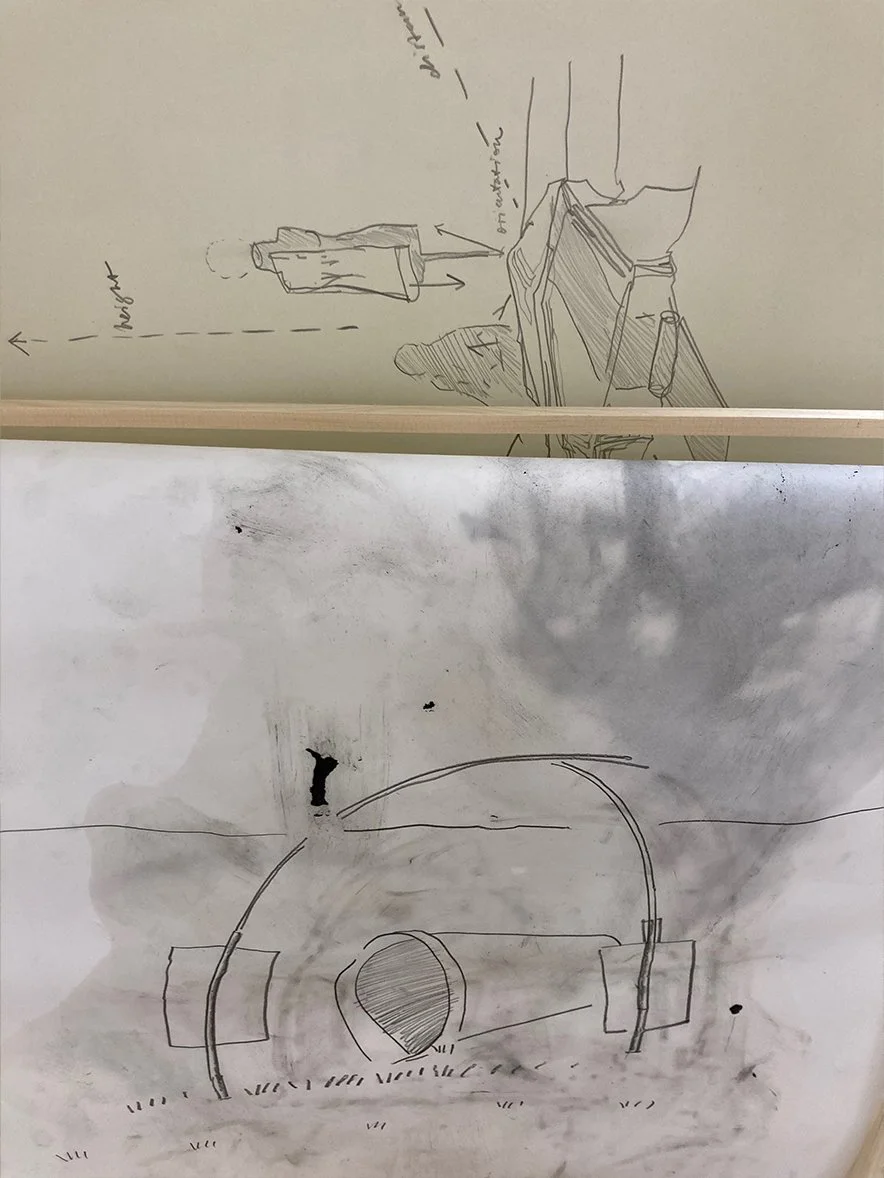
Firstly, in the front room, I exhibited work that demonstrated the reciprocal relationship between my experience of the landscape of Bakestonedale Moor and my practical approaches to making drawings in this outdoor environment. In this section of the exhibition, I showed a large paper rock cover that I made on site outdoors, patching up areas of white paper with tape, re-molding the rock’s surface. I had then proceeded to make drawings onto this paper cover whilst it was still insitu, on top of the rock. The drawings showed visual elements of the landscape around me.
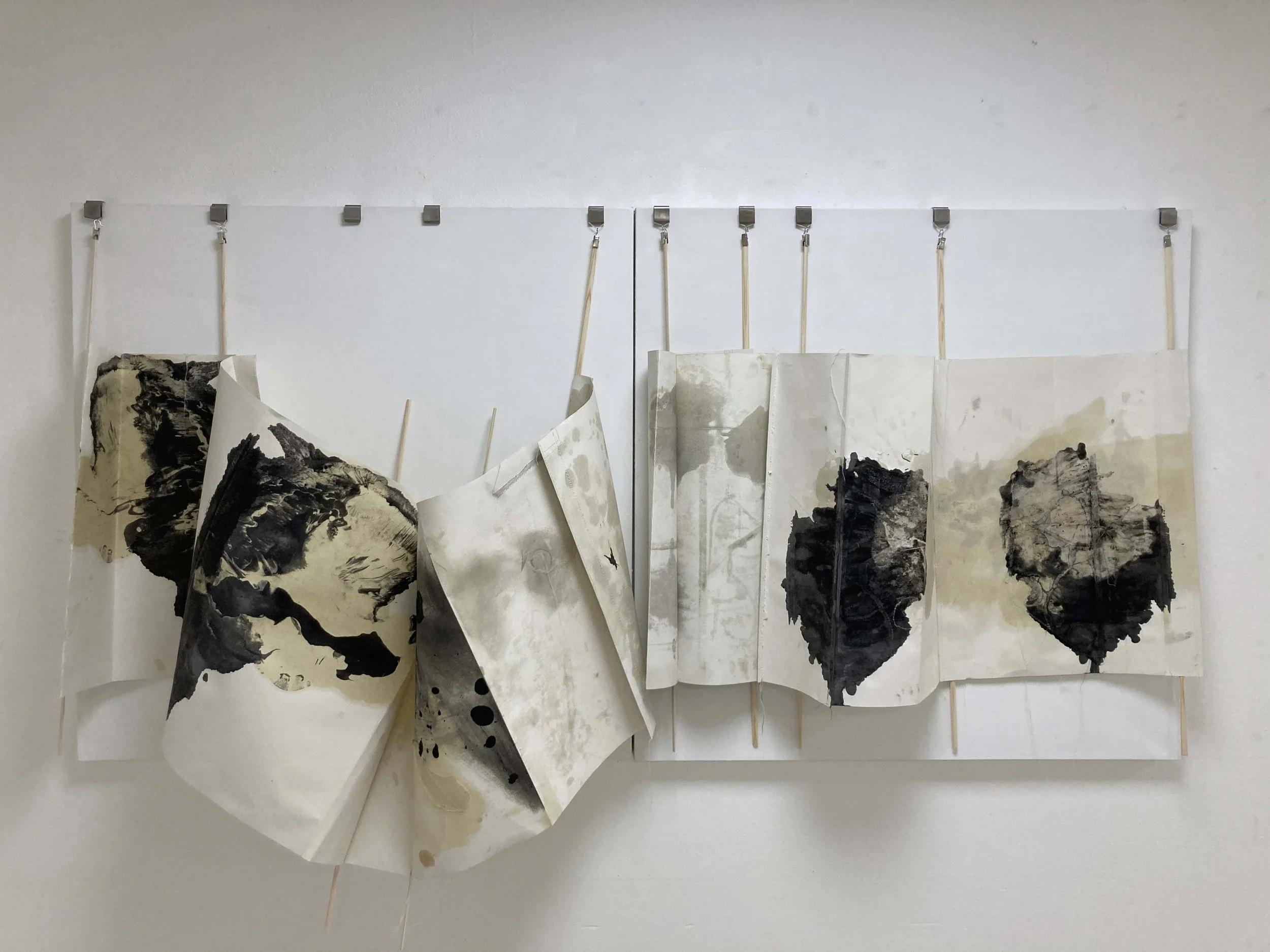
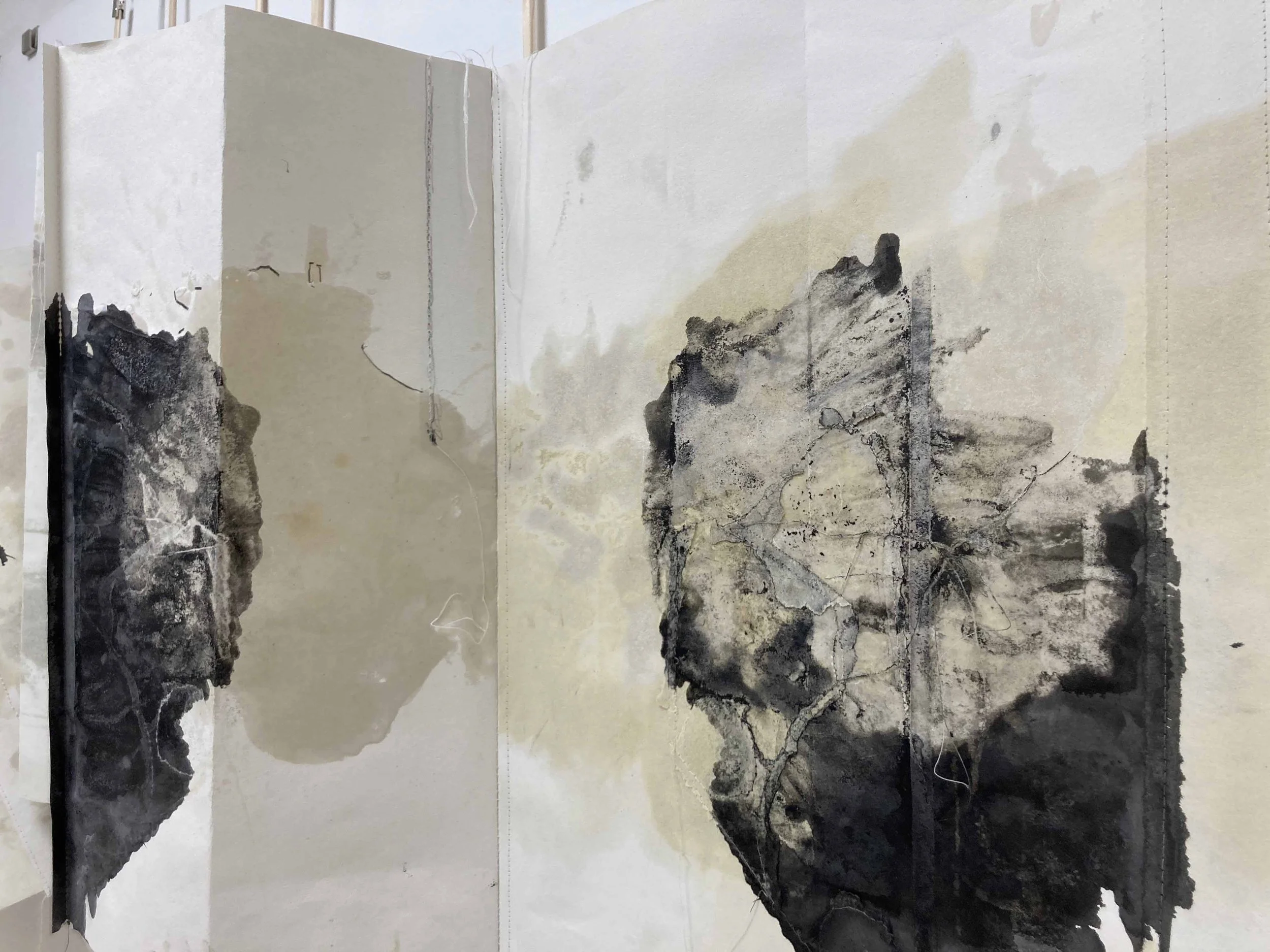
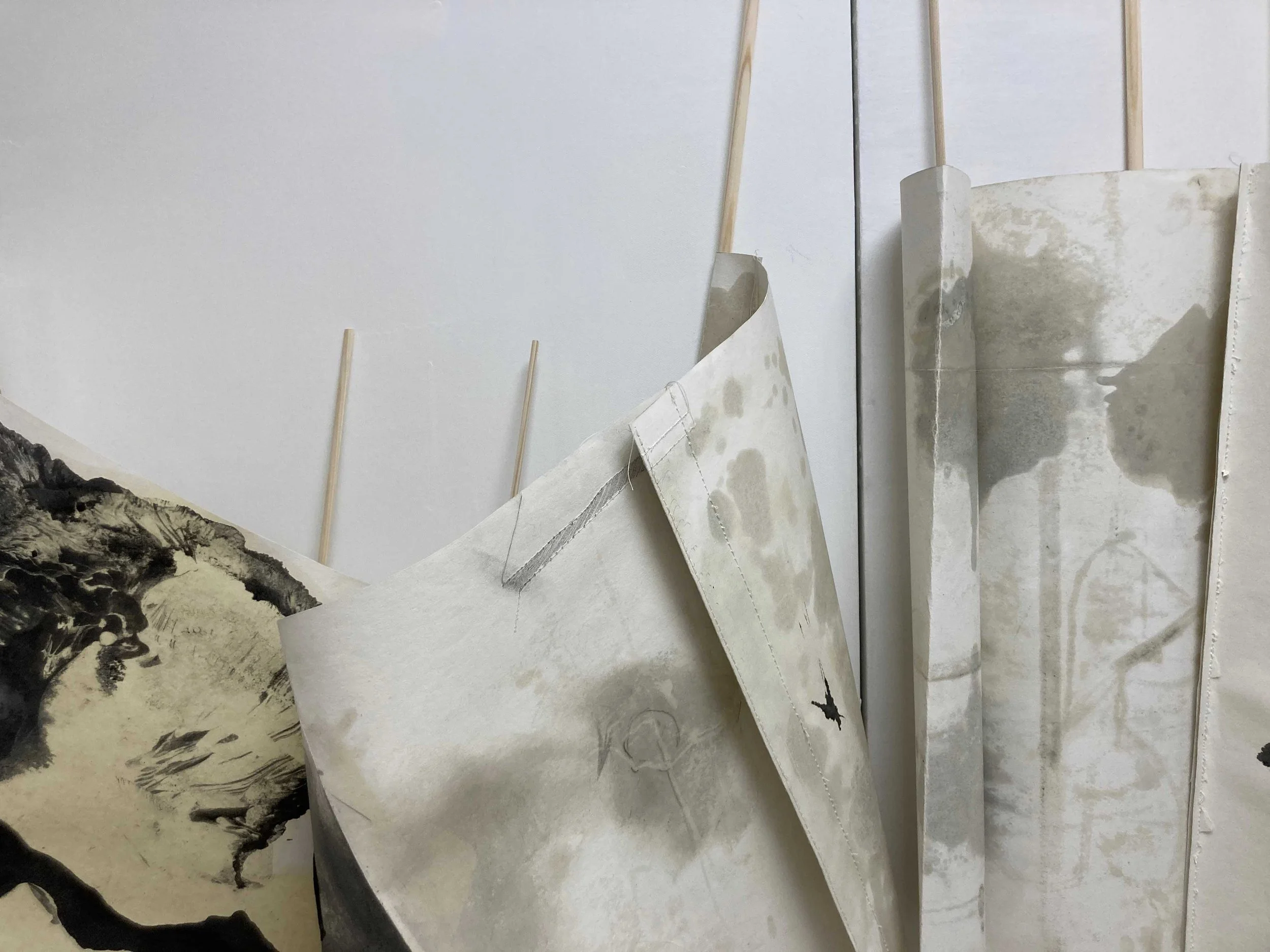
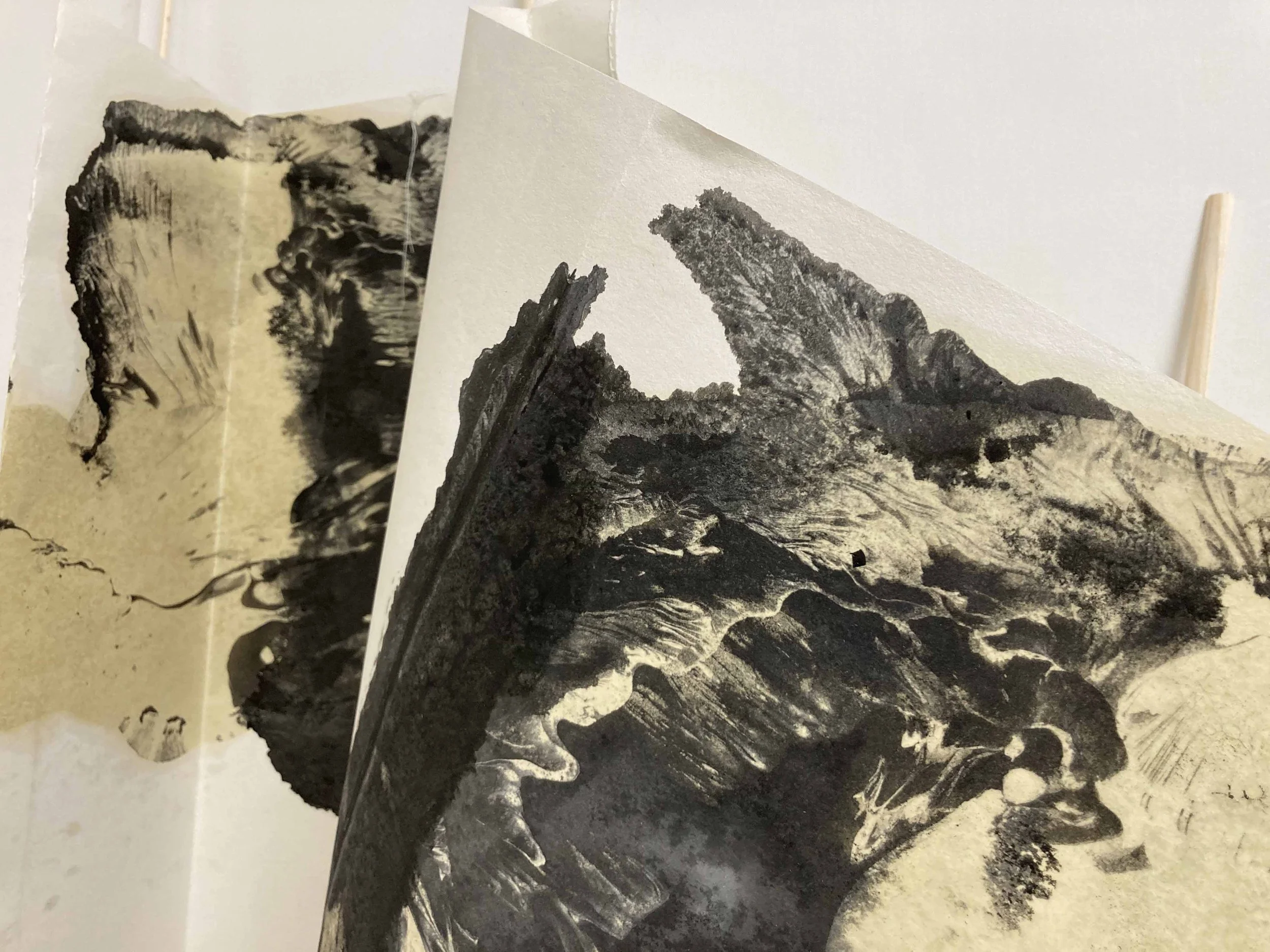
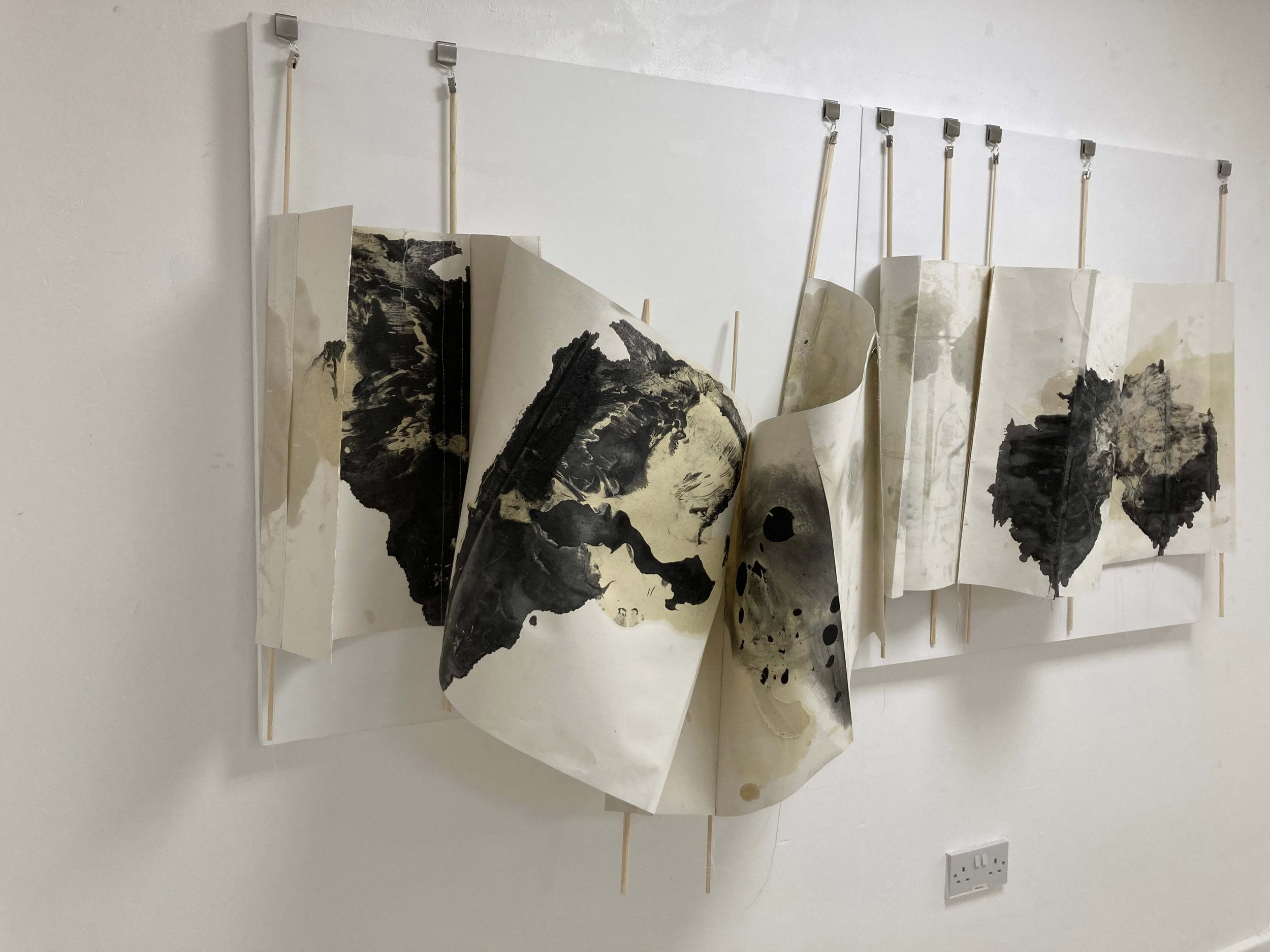
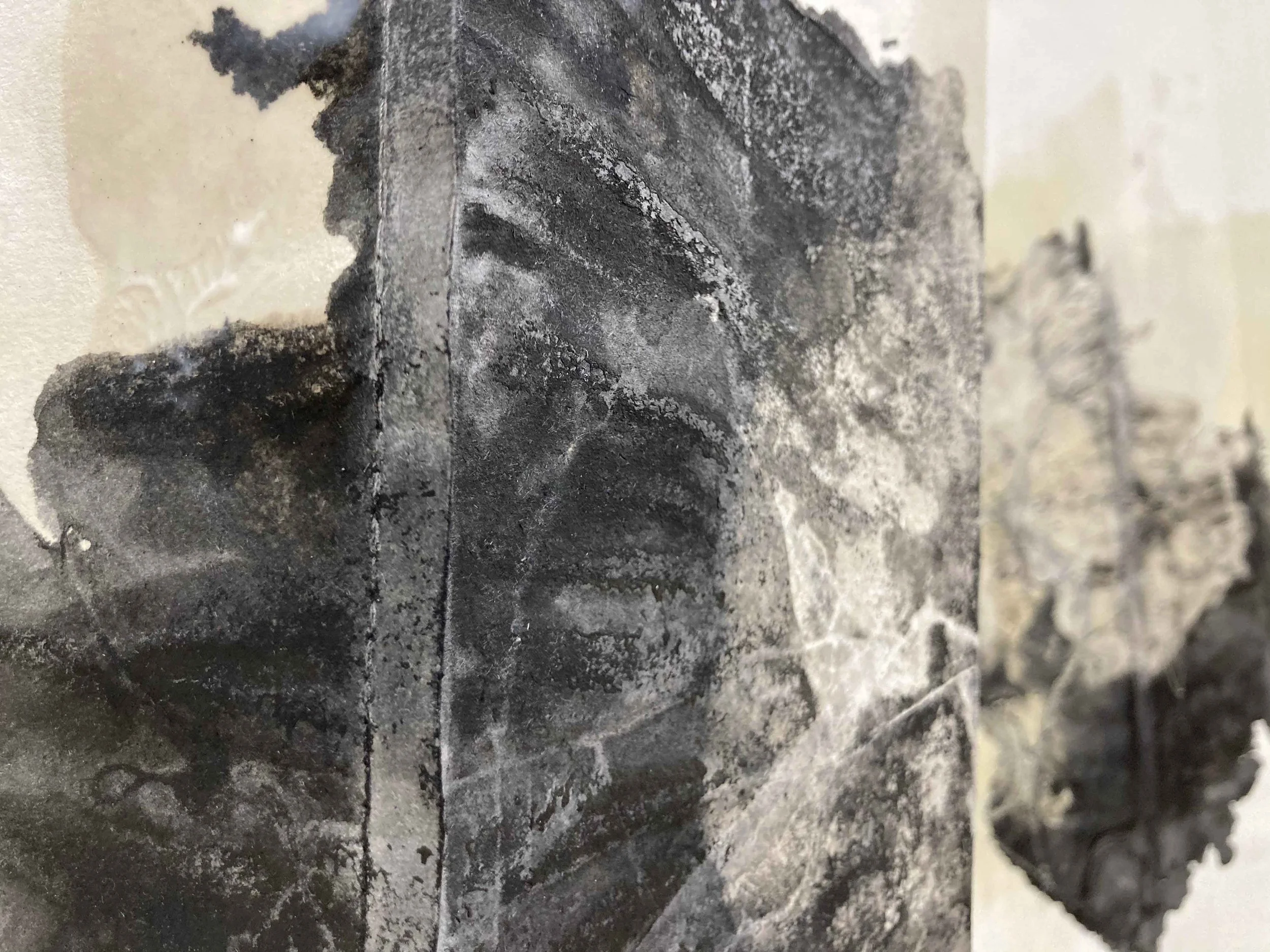
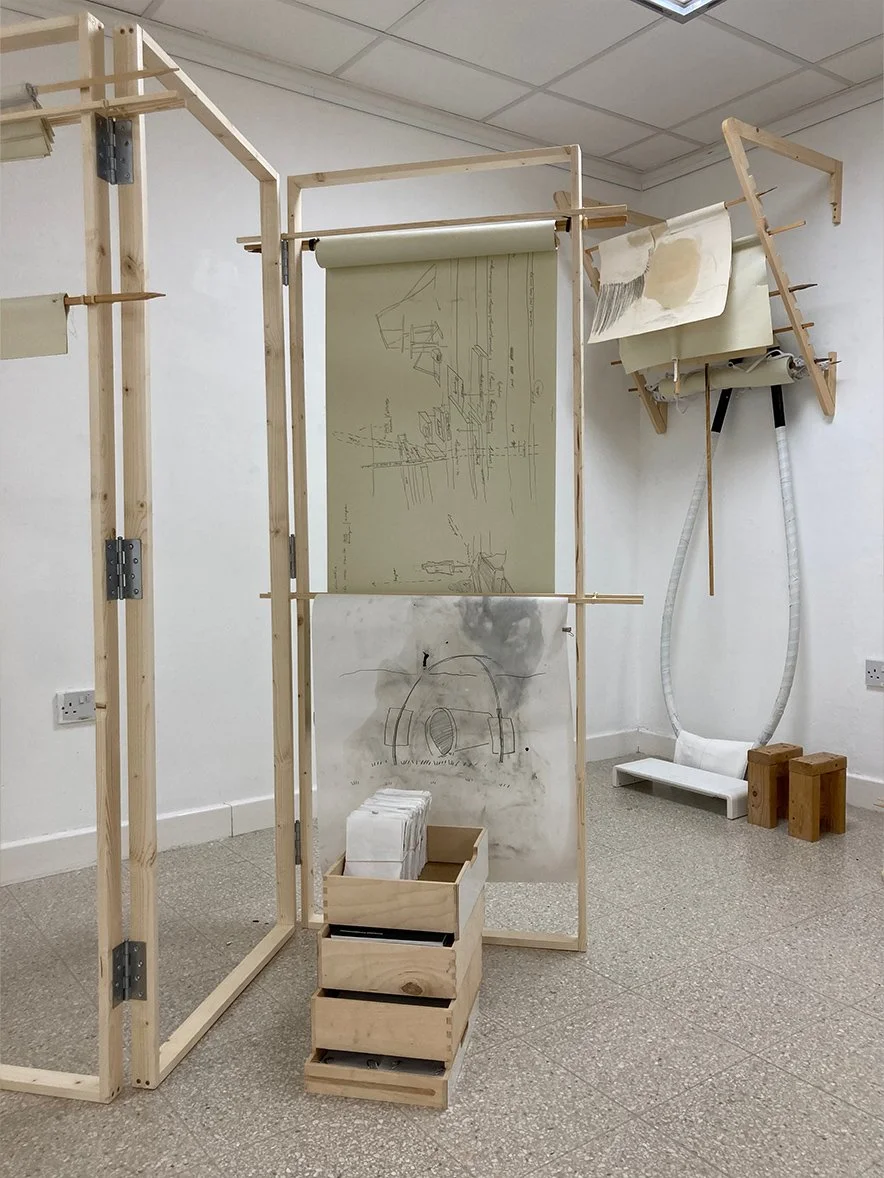
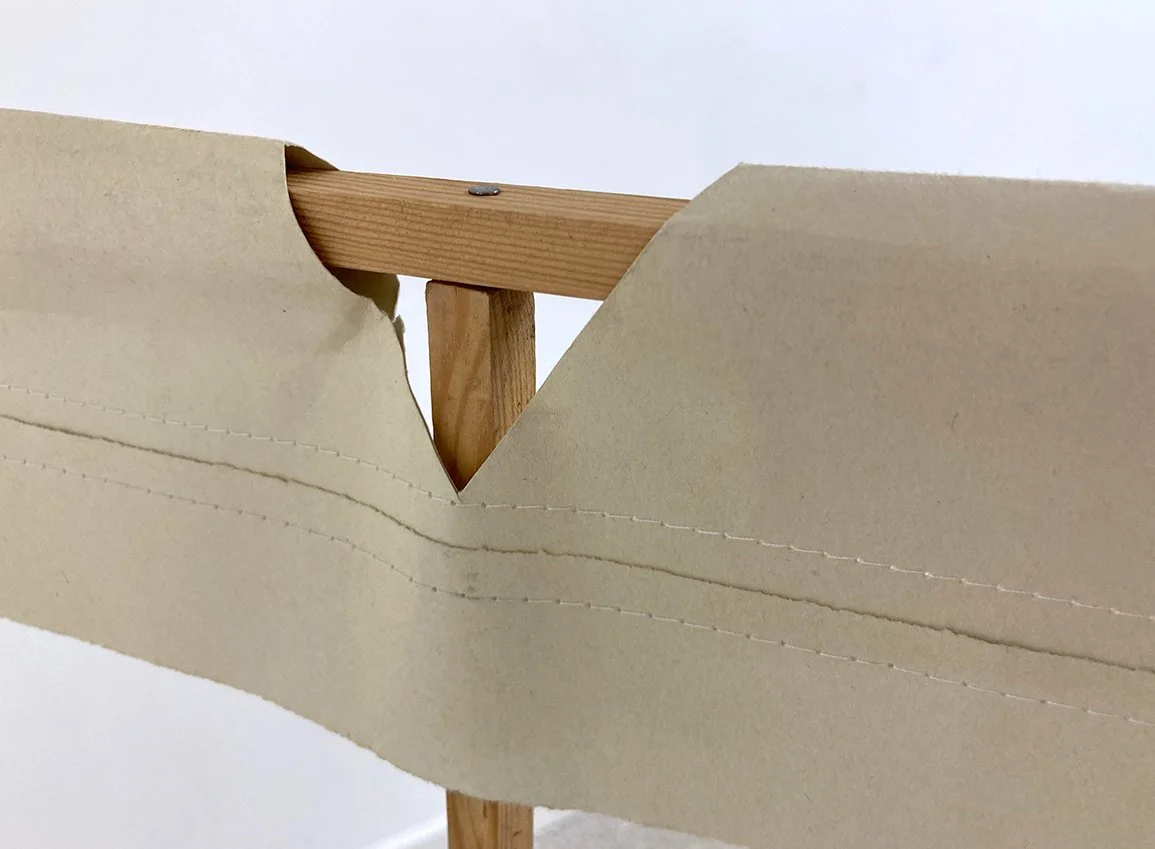
I also exhibited a long piece of paper, hung and folded in front of a canvas-covered backgrounds. I had covered the surface of this large paper with ink, wax and oil alternating the application of the liquid marks with folding the paper onto itself. In this way the marks’ liquids printed themselves again and again on the adjacent paper surface, producing second and third ‘generation’ takes of the original patches. This fold-and-mark process reminded me of the actions of engaging with a previous experience as we remember it and repeatedly re-live it in our memory. The surface marks’ visual complexity reminded me of the complexity of landscape surface and the multiple marks that the surface of the Earth receives due to the inscriptive process of geology and weather events. The folded paper represents an engagment with landscape experience abstracted from its physical whereabouts.
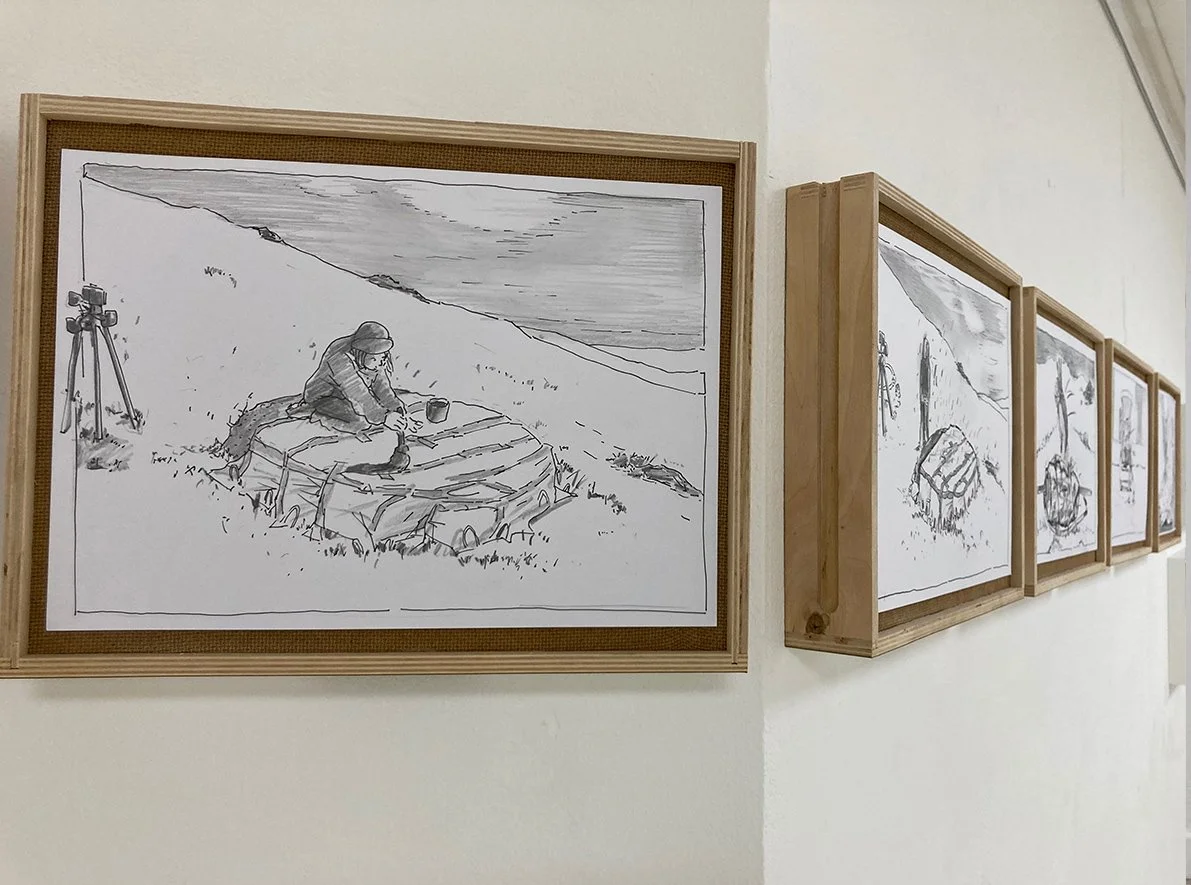
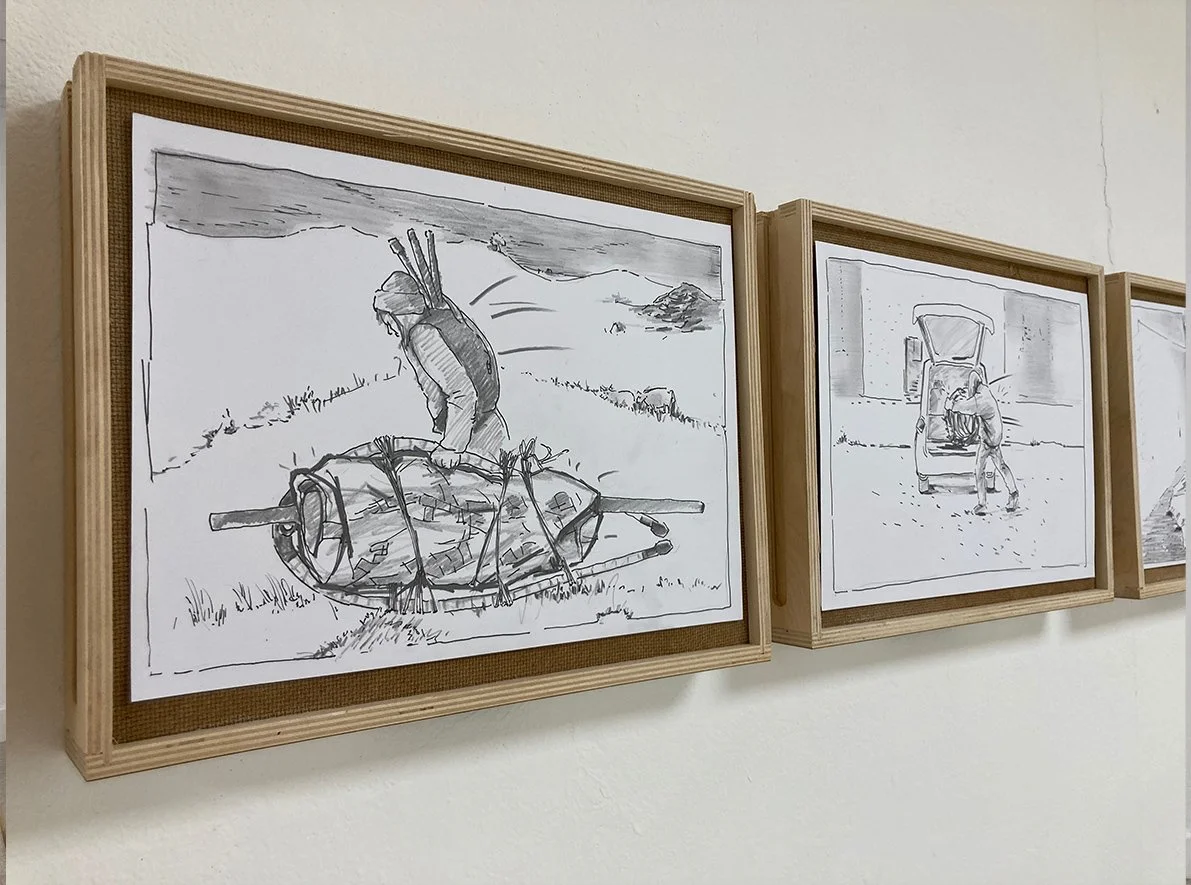
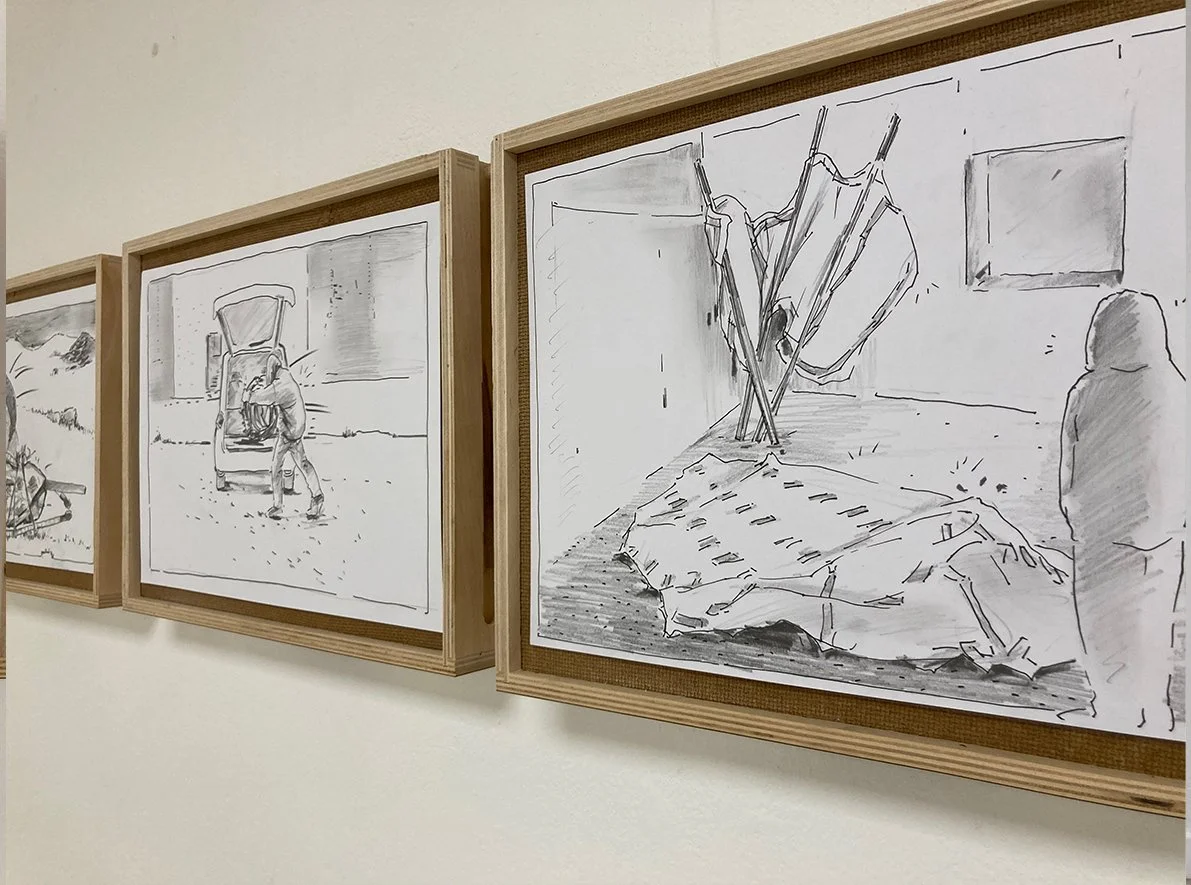
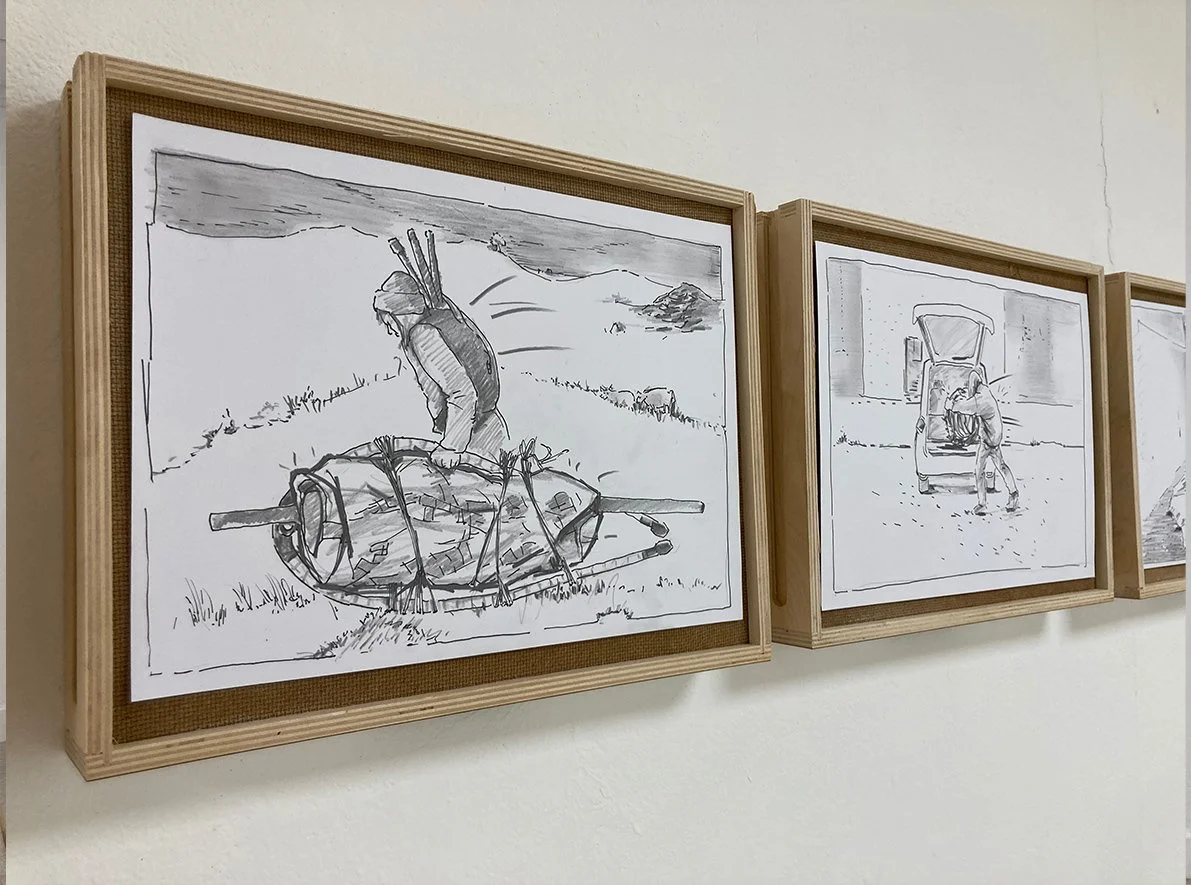
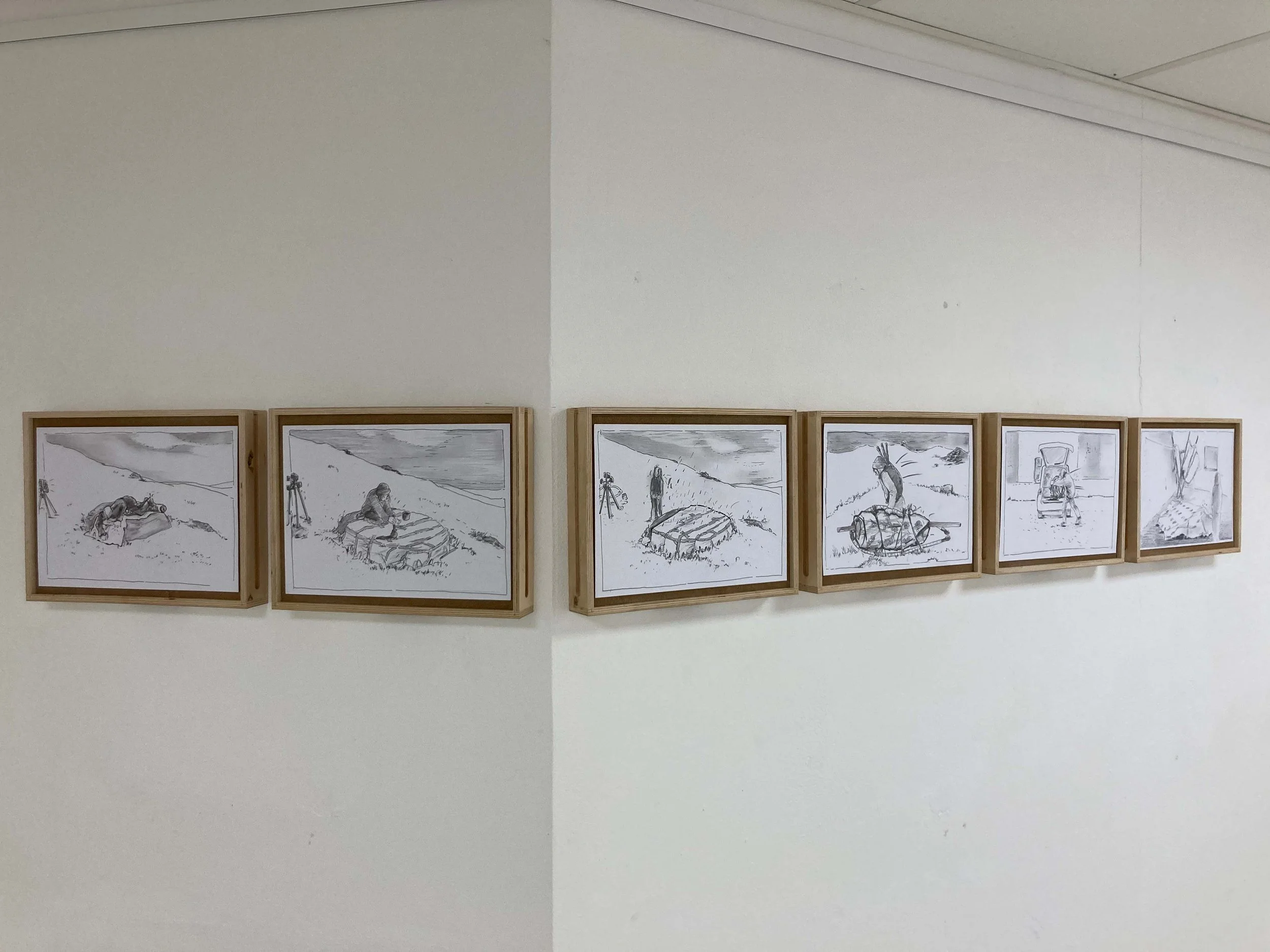
I also showed framed drawings that were illustrations of my actions with the large paper rock cover outdoors and, later on, in the studio and on their way to this exhibition space. The illustrations aimed to communicate to the viewer how my working process happend and what stages the materials went through as I worked with them.
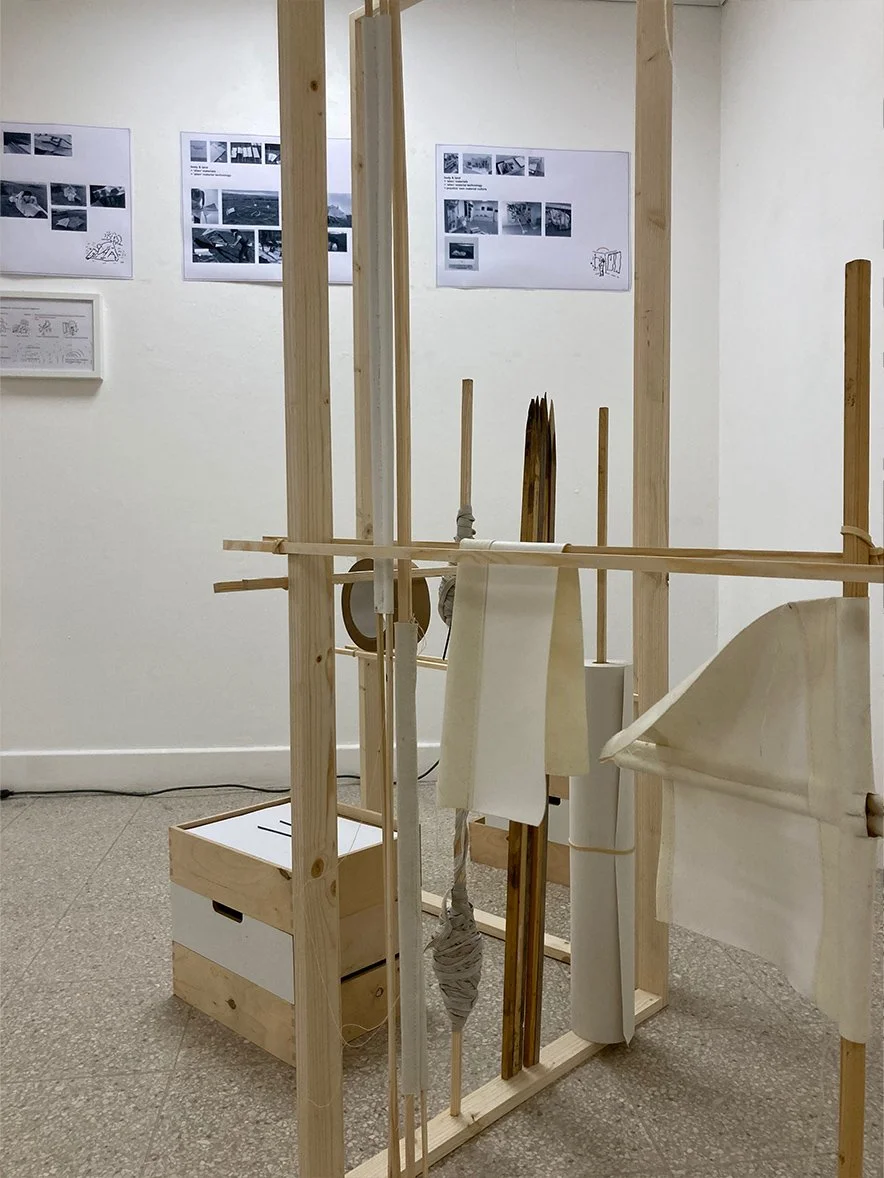
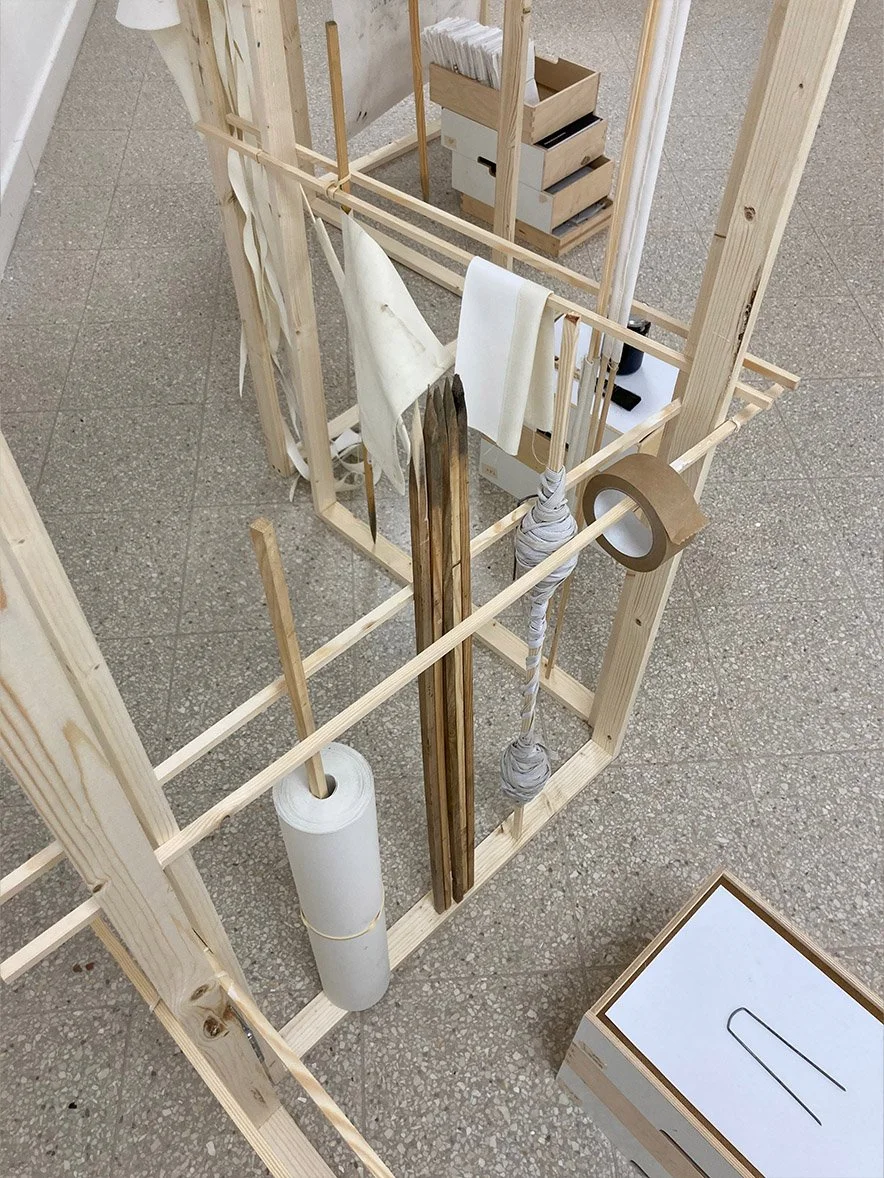
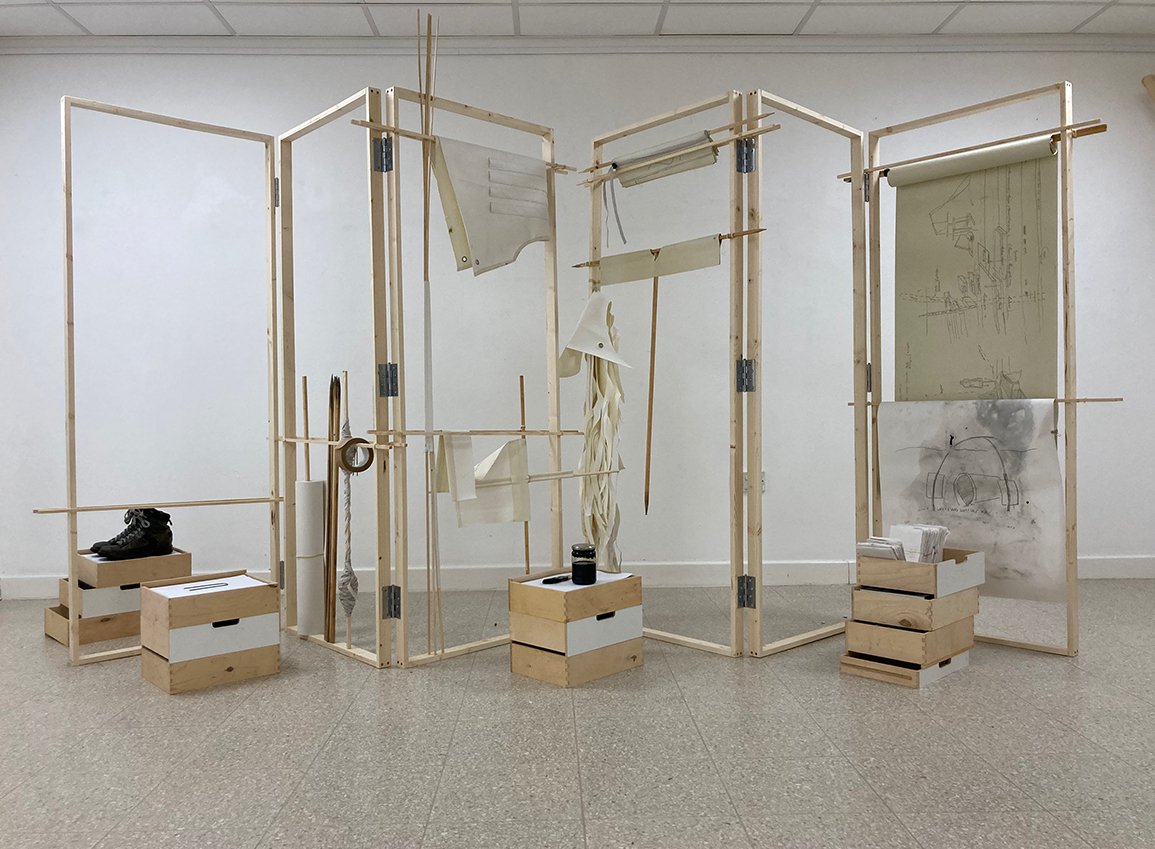
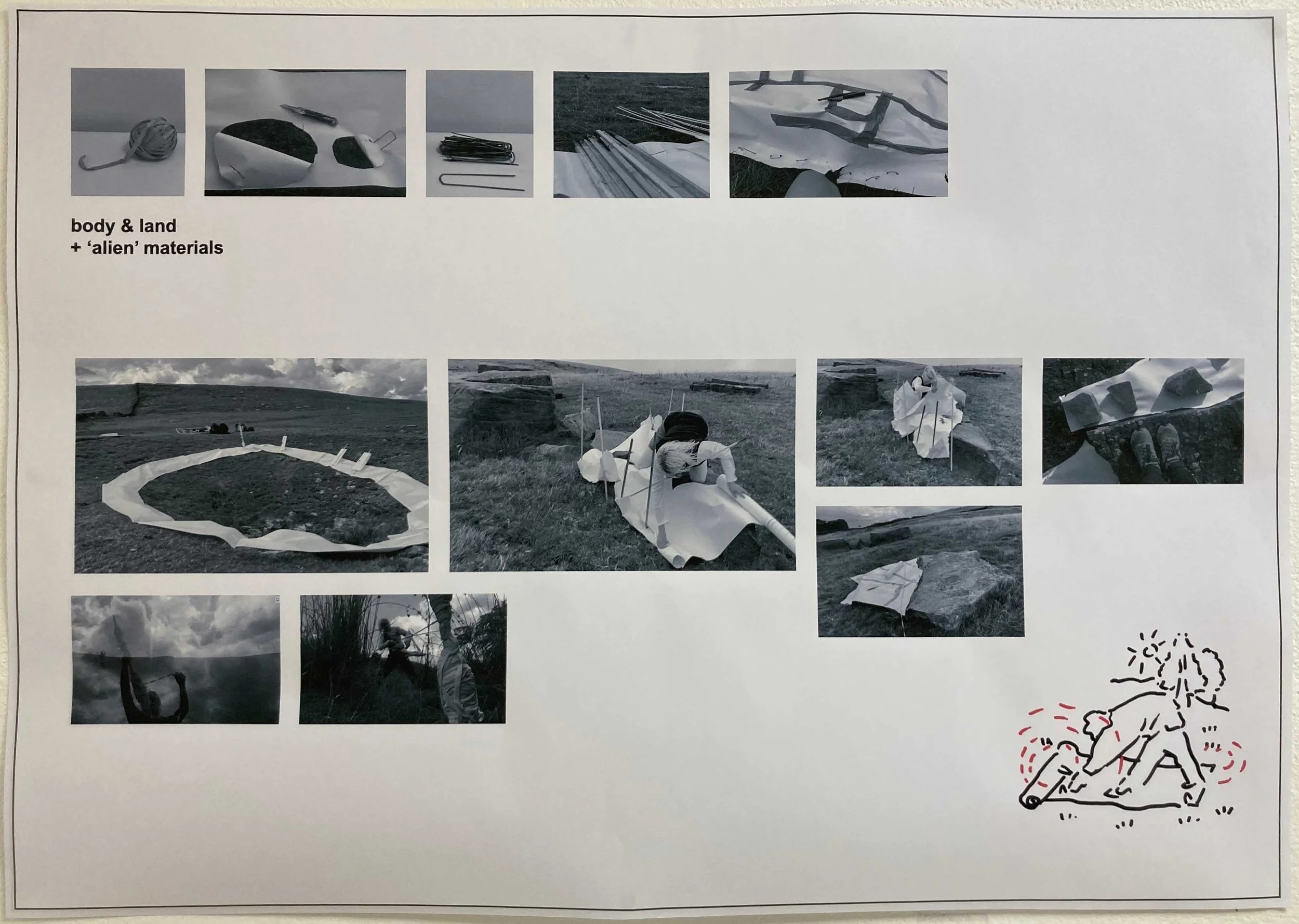
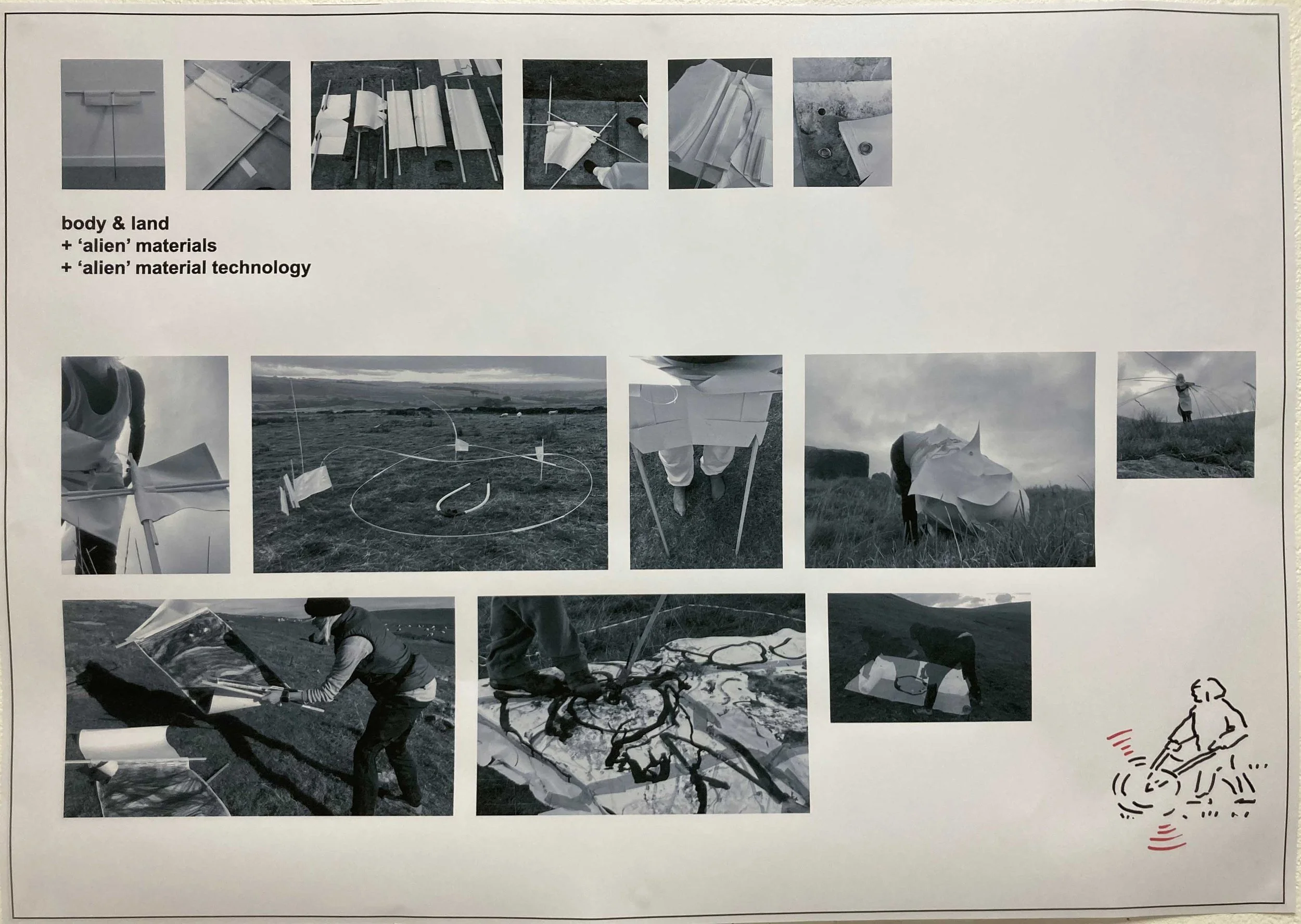
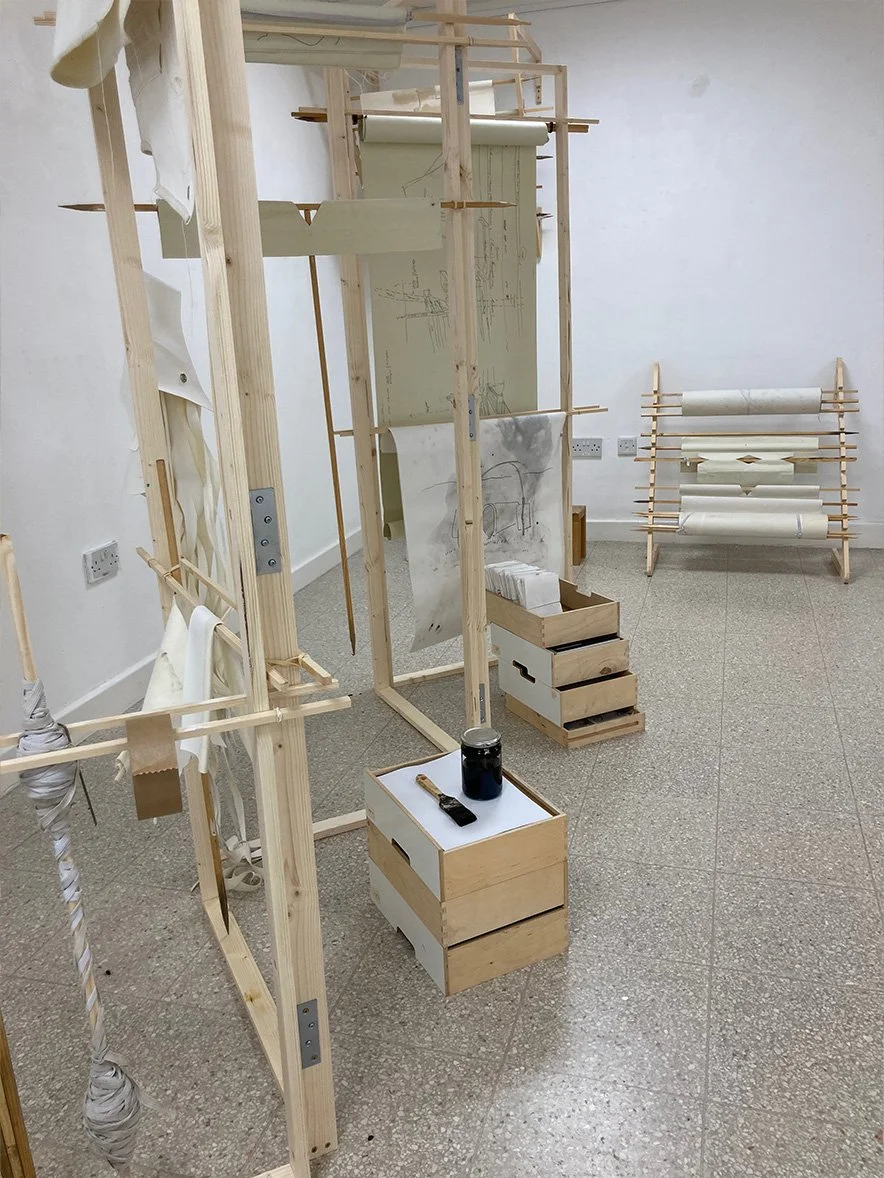
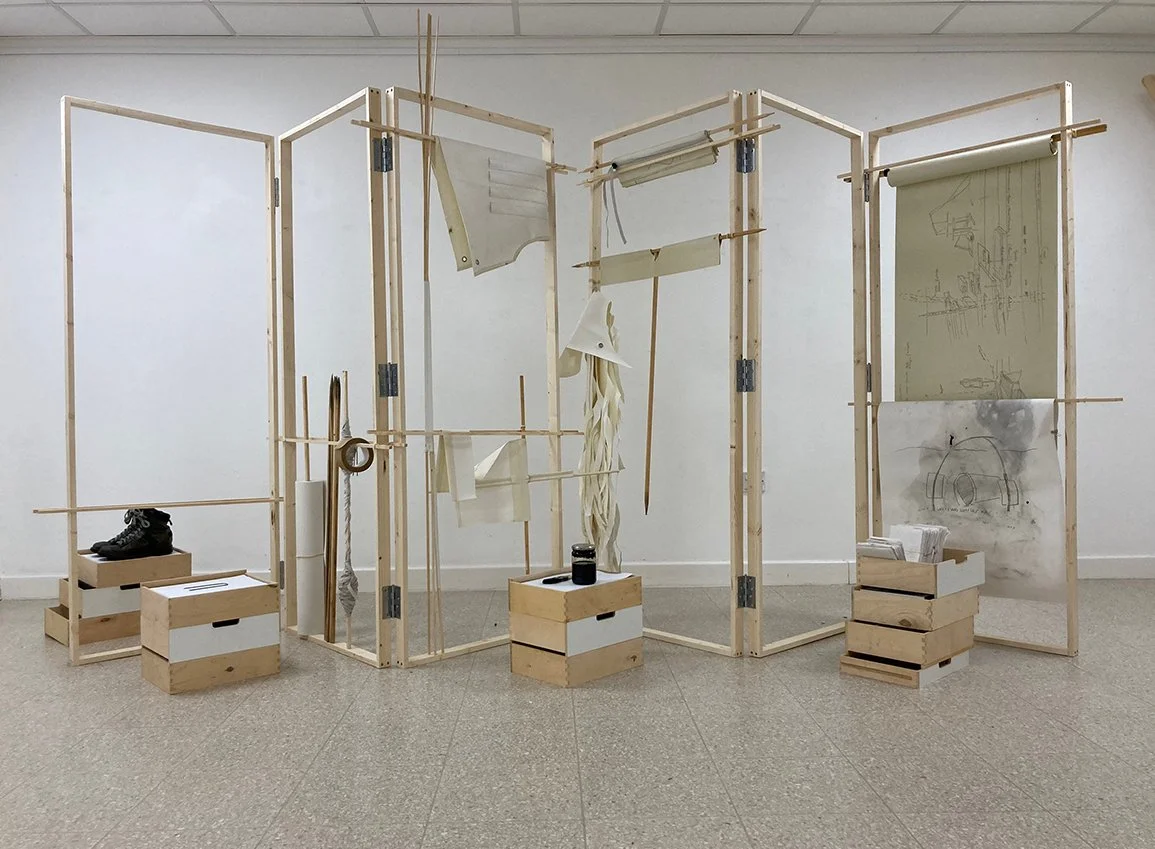
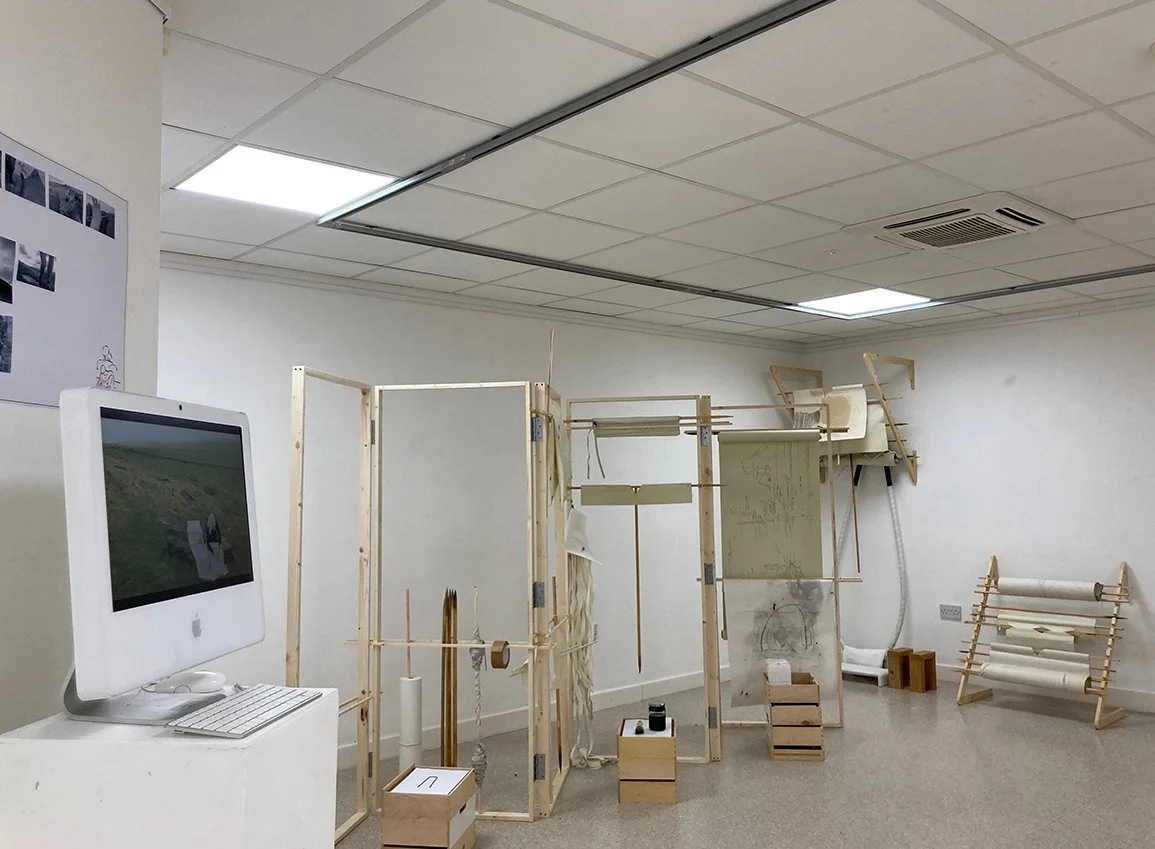
The display in the back room showed the second part of this exhibition’s work. In a theoretical conceptualisation of my artmaking process on this project, I had categorised this artmaking’s specific relationship between materials, processes and human activity by understanding it as an example for the development of material culture. I categorised the relationships between materials and human actions in tiers of complexity, where folding, dividing, sharing and assembling were relevant actions. I communicated this concept by making posters for each of the respective levels of complexity and exhibited these posters hung on the walls of the exhibiton space. As an additional way to visualise and communicate about this taxonomy of material and process complexity, I arranged example materials in a three-dimensional free-standing frame, allocating each level of complexity a segment of the framework.