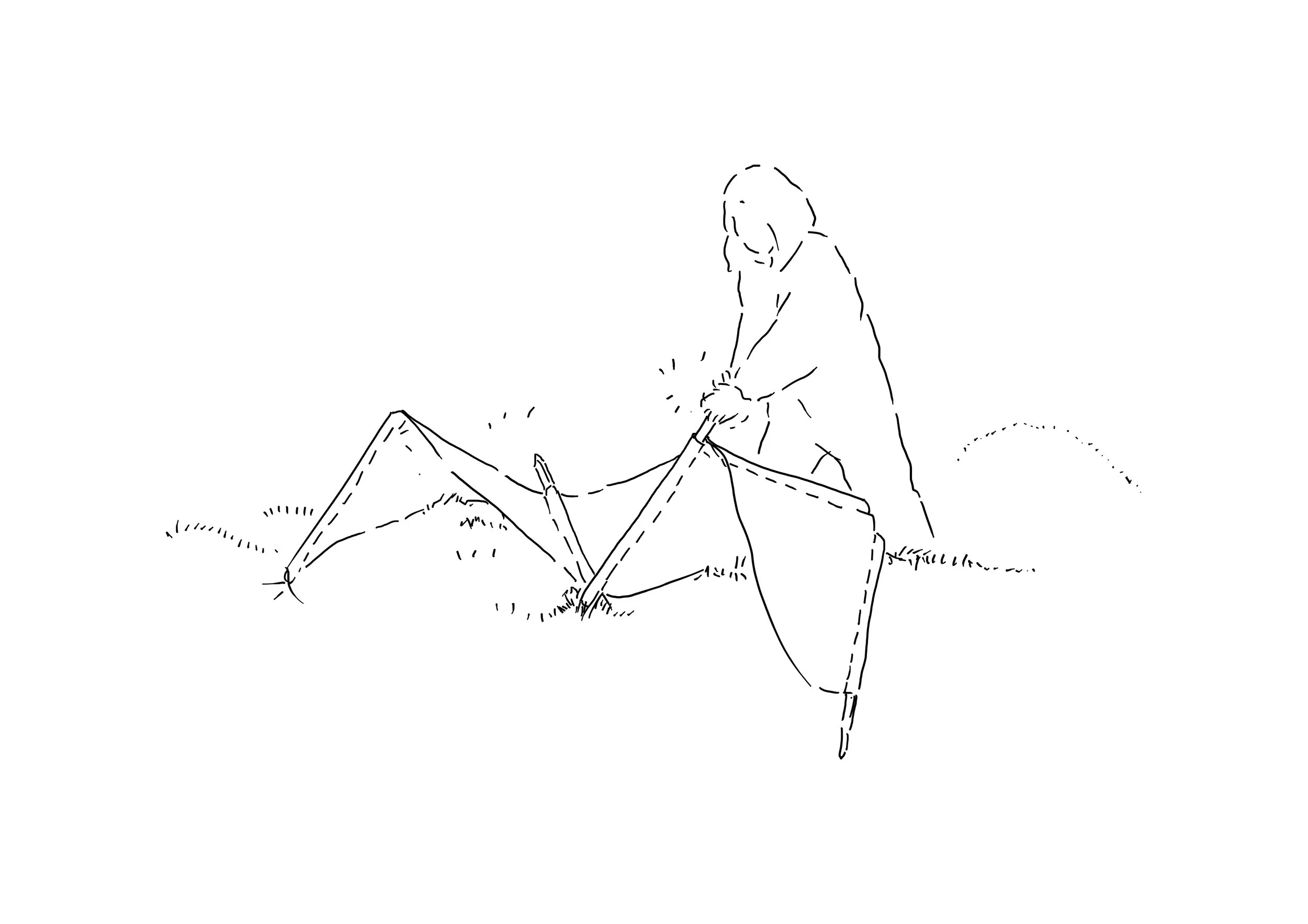
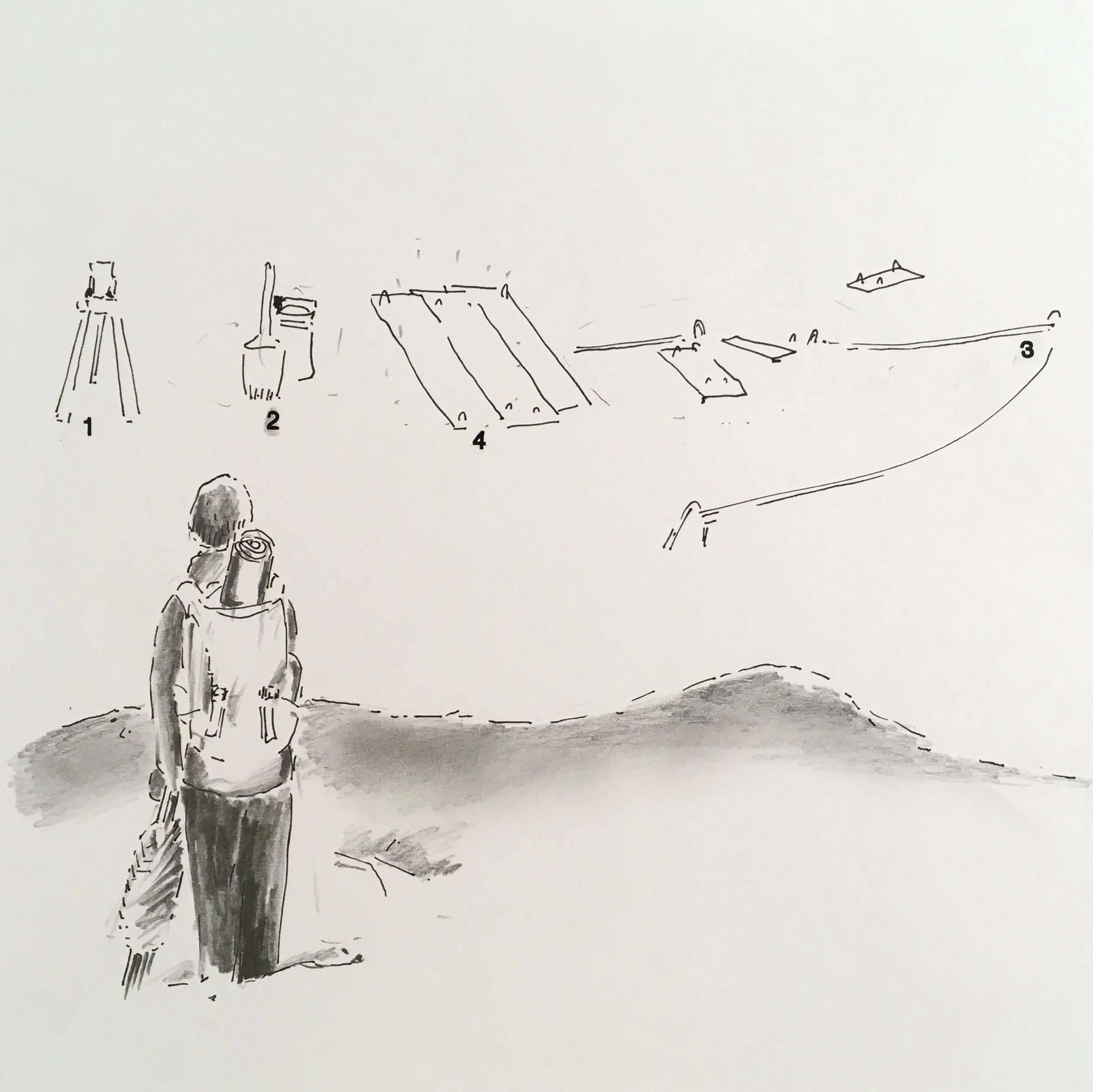
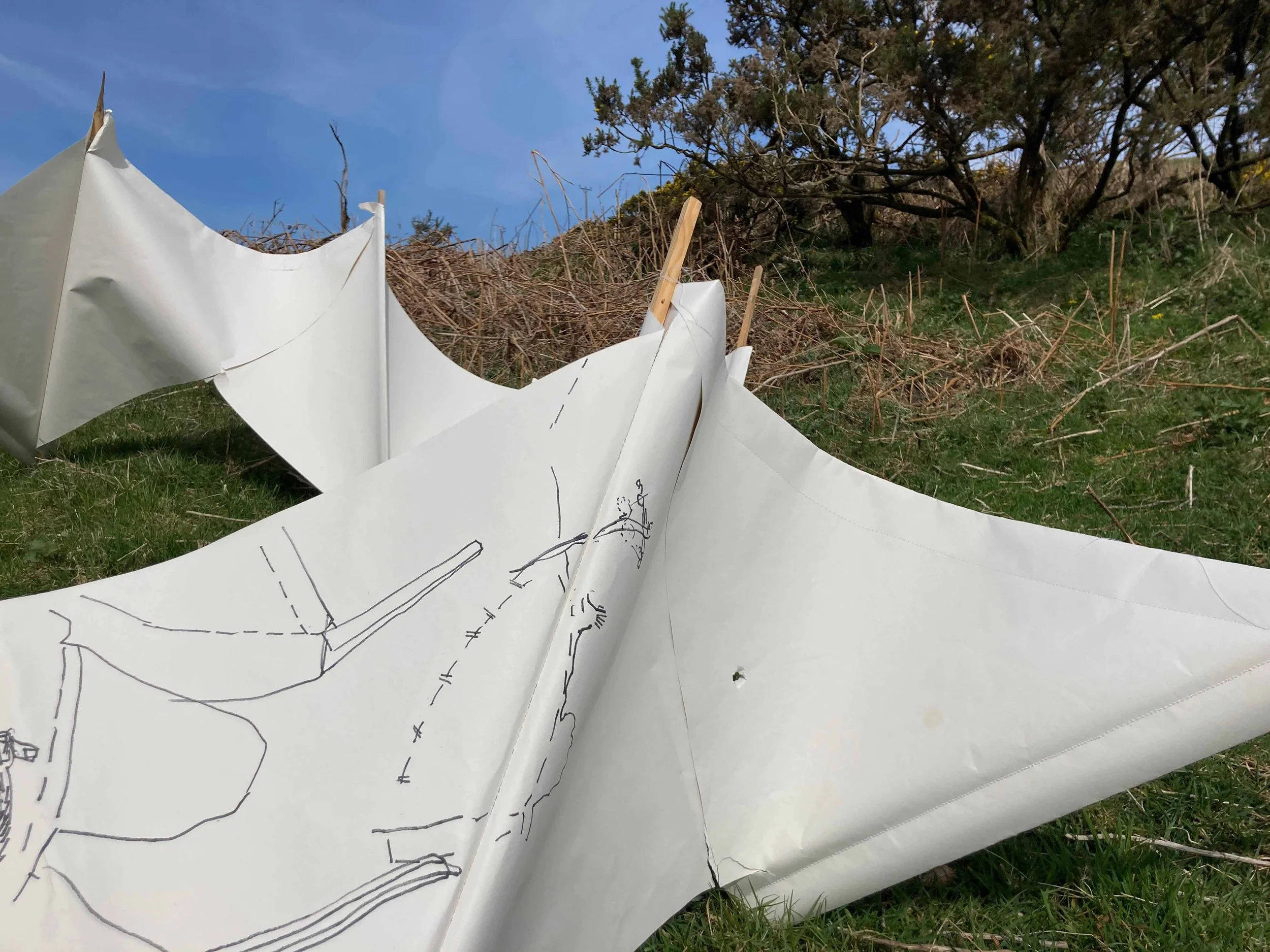
Drawing is more than just moving a line-making tool on a surface, leaving a mark. I am interested to explore the wider implications, contexts and intentions of such a seemingly simple activity.
We make marks on paper to document what we see, or how we feel. But we also draw as ‘record taking’ – to remember and keep what we saw, what happened, or what was important for us.No matter for which reasons we draw, the drawing actions and our experiences of them are an event that takes place in the here and now: the minutiae of its unfolding is a flow of shifting focus points, of our awareness of ourselves, our feelings and surroundings and the use of the materials.
There is a temporal dimension to drawing. One thing follows the other: an observation is followed by making marks, then, again, the drawing person might respond to a detail in the observable environment… I compare this ‘before and after’ aspect of drawing to playing music where one note or quality of tone is followed by the next. Though there may not be an audience to watch how and what we draw, I still think of the actions of drawing as a performance where things are done and experienced. However, the performative aspect of making a drawing reaches beyond the here and now: the actions of drawing are part of our habits of using materials and our temporal patterns of artmaking activity (a drawing ‘practice’) as they unfold over weeks, months and years.
When we draw, we use our own bodies to make marks: our bodies are extensions of drawing tools or, they are THE drawing tool, e.g., when we leave footprints on the ground. The body’s capacity to resonate from what happens around us gives our drawing actions a unique subjective dimension. The human body acts as a sensory system that allows us to evaluate the experience of drawing actions, e.g. of touch perceived with our fingertips, the colours that our eyes see, or the tension in our arm as we make a long sweeping movement over paper.
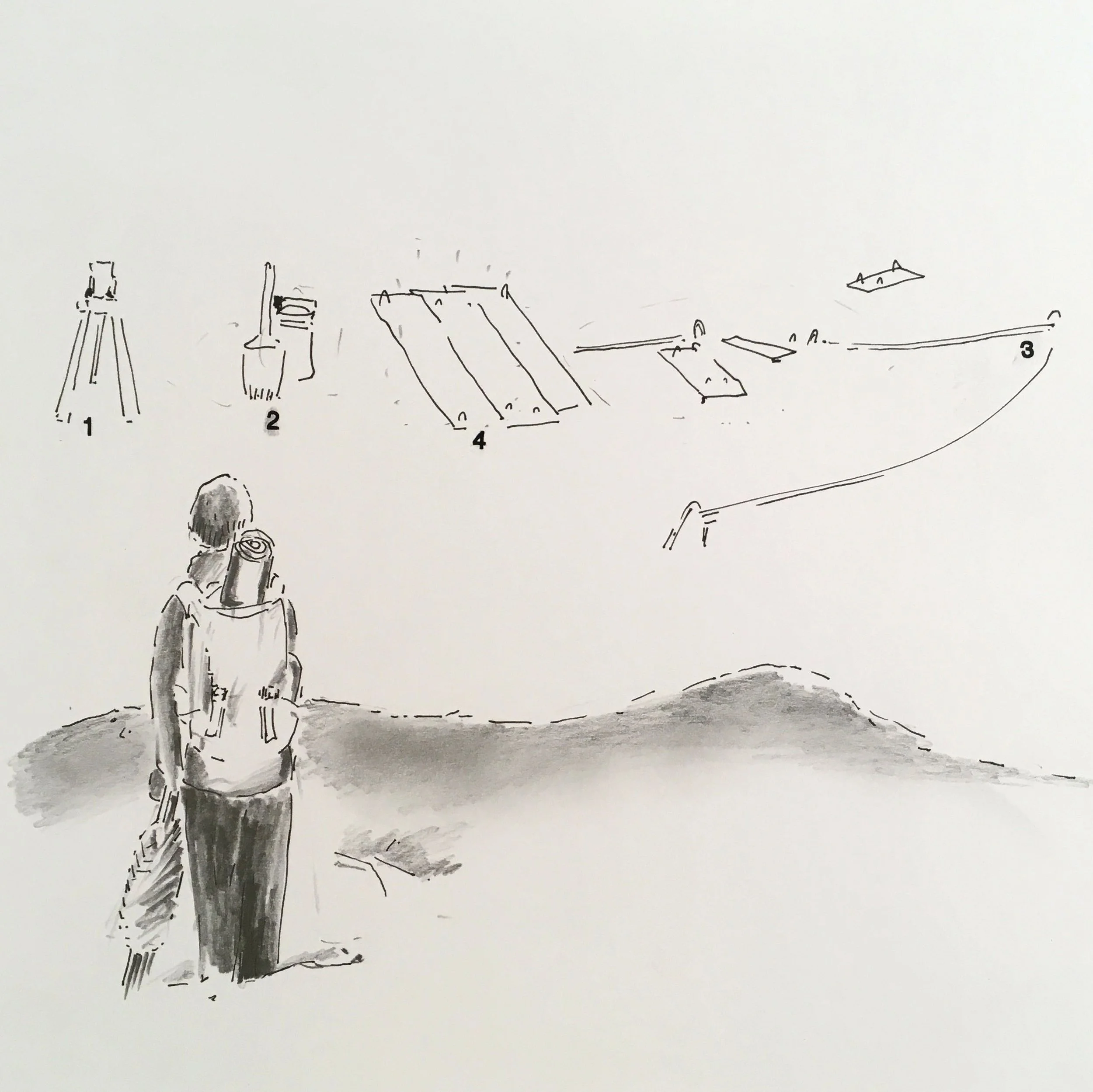
We might make a drawing as part of a planning process – when we think about things in the future, or to record instructions for designing and constructing an object or planning an event. Drawings can be scores. I am particularly interested in the curious relationship that unfolds when I compare a drawing that I made to plan something with the result of the planned activity. The discrepancies between both can be very revealing about what we know about ourselves and the world of objects. I also find it deeply fascinating when we bring together – within a picture or an exhibition – drawings that occur on a paper surface, with other objects in space that these drawings relate to.