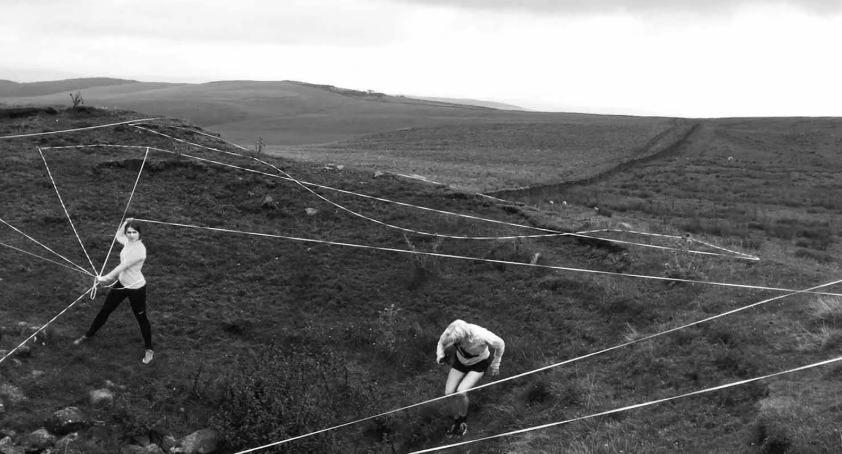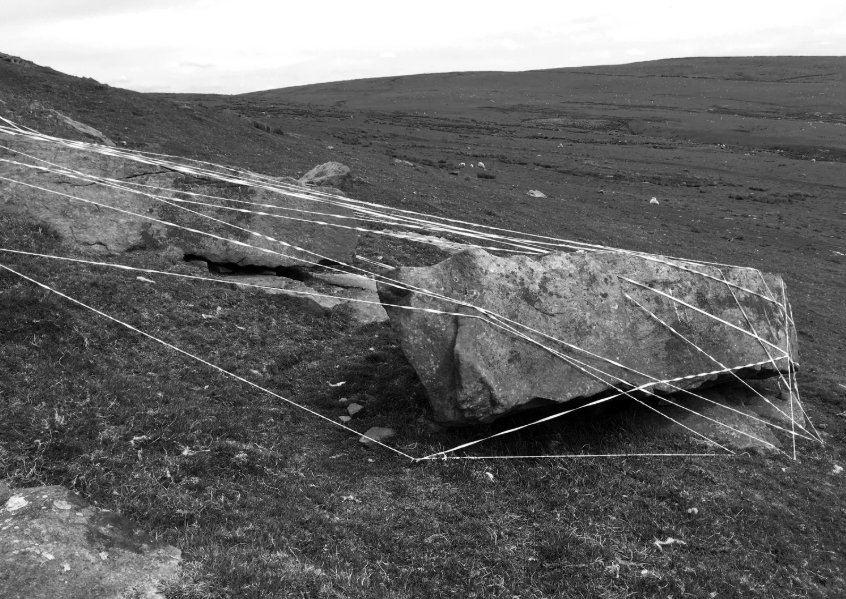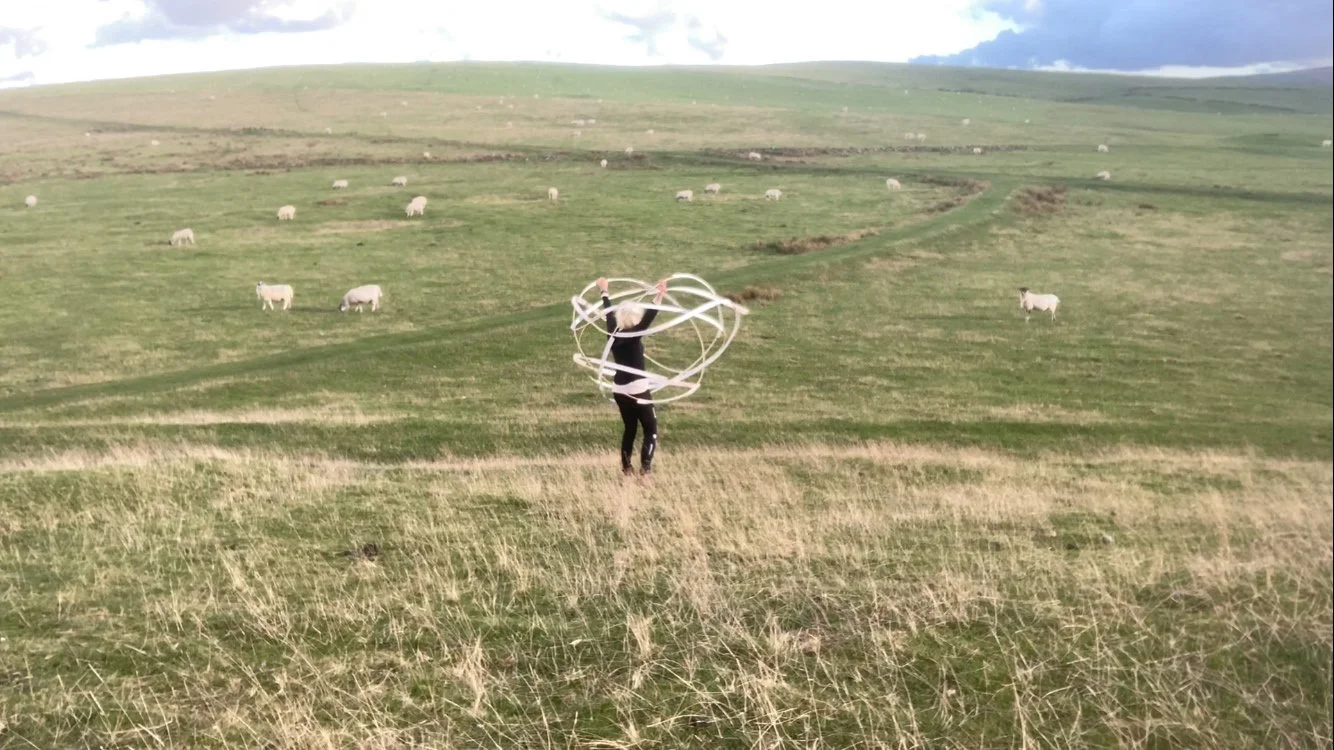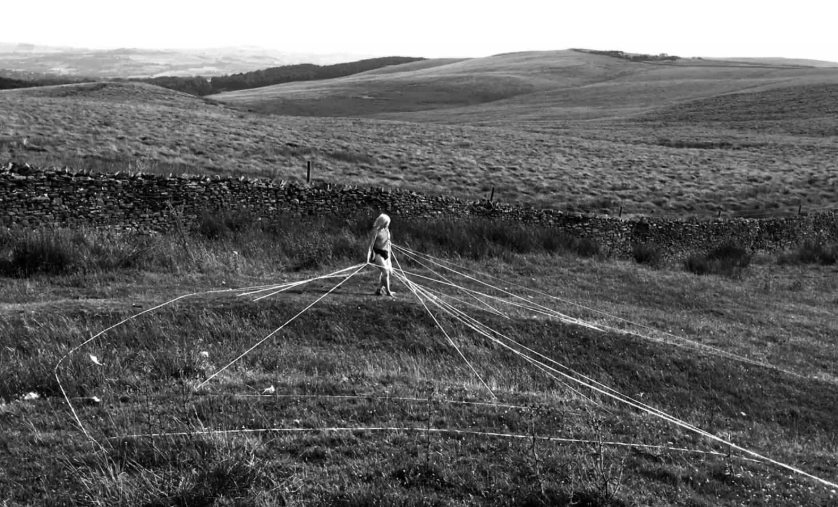
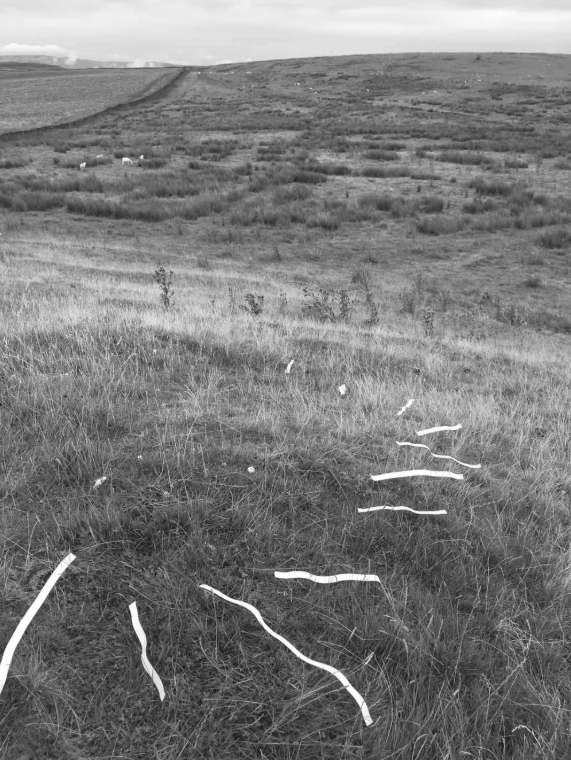
Indoor and outdoor environments have demarcations and sub-divisions. We see boundaries between things as they are broken up into segments. This is due to natural processes or human-made: fences and walls signify boundaries and sometimes are an expression about who has access to certain parts of the land. Fences can limit trespassing, and walls can even limit visual access to what is behind them. Linear forms in outdoor environments, e.g. geological strata indicate about the geological process of sedimentation that have occurred a long time ago.
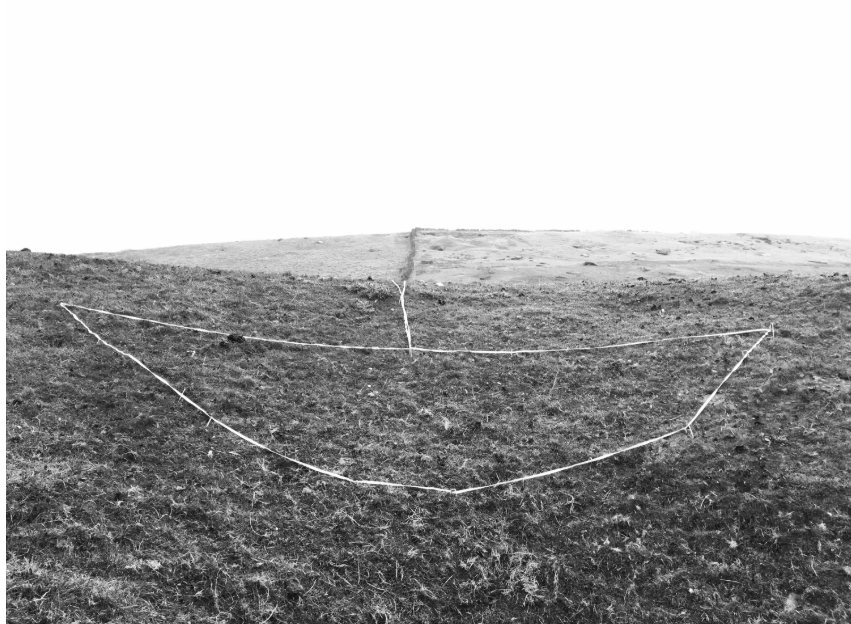
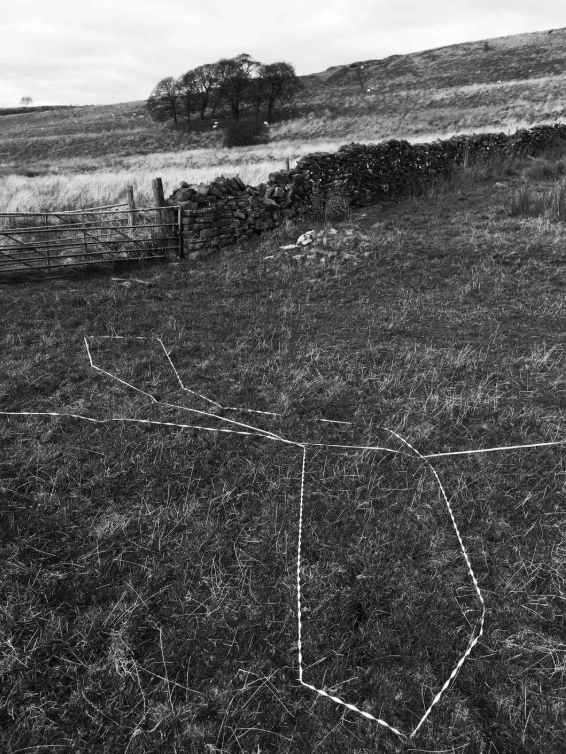
In my past artmaking approaches, several years ago, I have used line by hand-stitching with thread onto fabric, producing images and abstract linear patterns and these stitched drawings became part of wall-hung artwork. Such work led me discover that I could use strings and ropes as sculptural additions in outdoor environments and in this way change the landscape. I found out, that the wind can function as an actor that contributes to such sculptural undertakings outdoors: wind moves things. When I fixed string to two points and suspended it in the space between the attachment points, the string started to vibrate and make humming sounds whose frequencies changed dependent on the wind’s strength and direction.
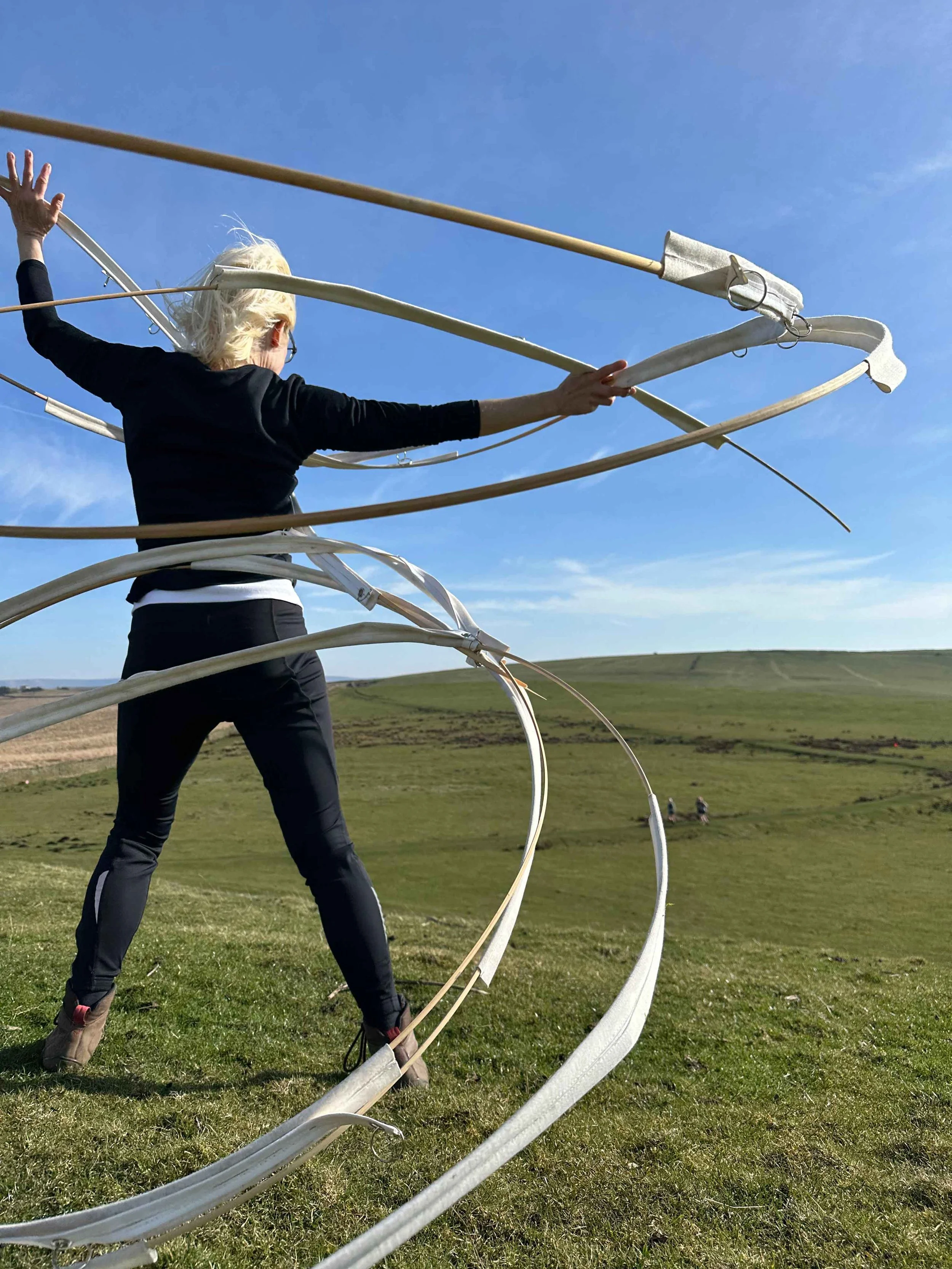
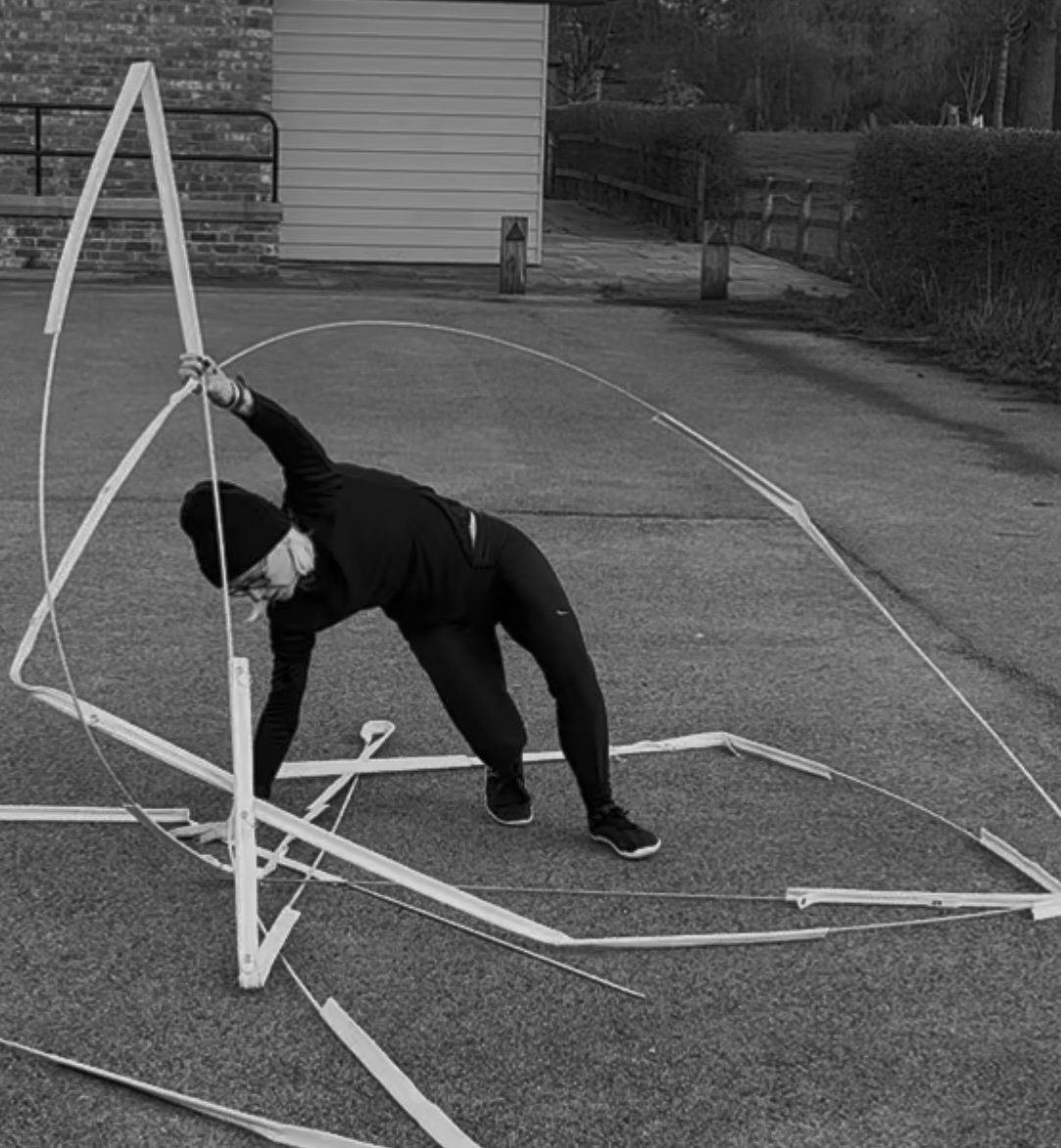
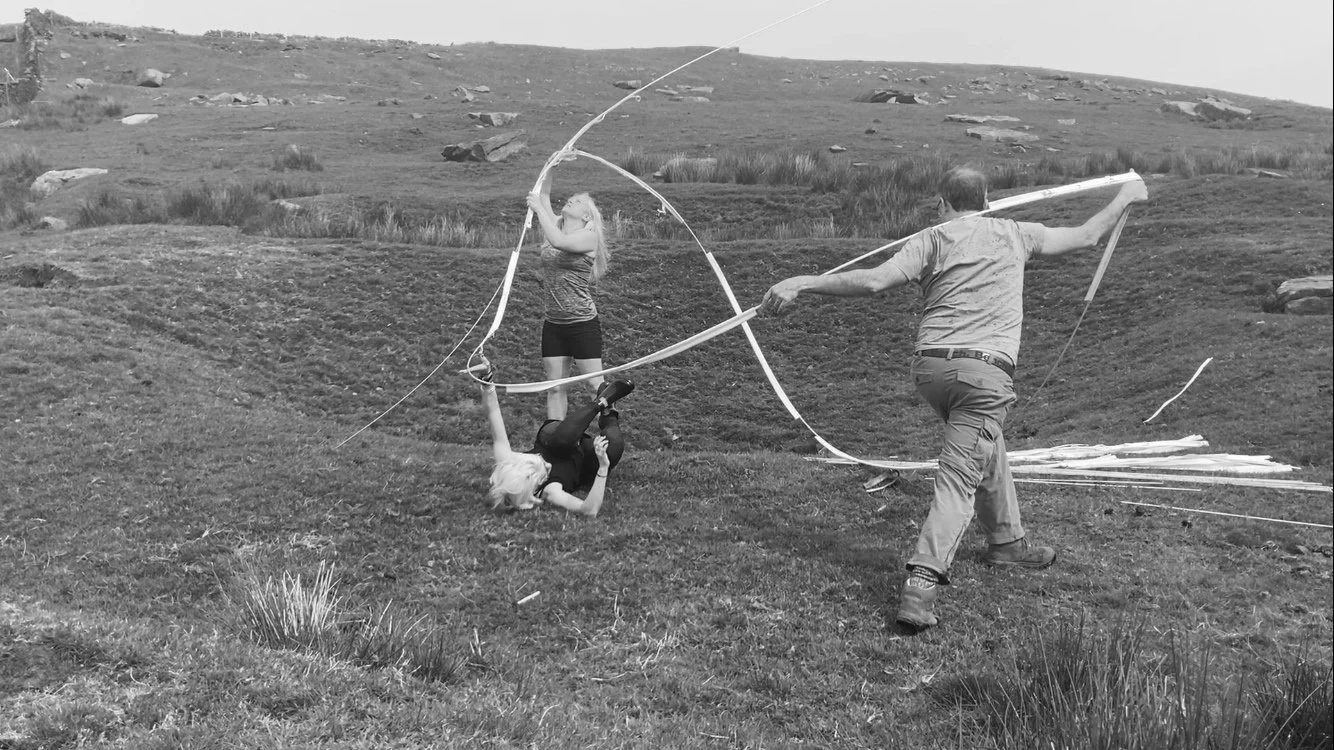
As a variation of working with line outdoors, I make my own body become part of line additions to the landscape – and, rather than stand still, I moved around within the line structures. Such a temporary, kinetic way of using physical line with the human body culminated in a collaboration with Gemma Collard-Stokes and Scott Thurston. We connected ourselves to large line-constructions made from fabric and wooden strips with the intention to make the experiences of our movements and feelings to become a shared evolving performance between people and land.